Maresins are a family of bioactive lipid molecules involved in the resolution of inflammation and tissue regeneration.[1]
Four classes of maresins have been identified: maresins 1 (MaR1) and 2 (MaR2), MCTRs, and maresins L1 (MaR-L1) and L2 (MaR-L2). Maresins are part of the broader group of SPMs.[2]
They are produced from omega-3 polyunsaturated fatty acids, primarily in macrophages but also in leukocytes and platelets, through different synthetic pathways that share the same first step: the oxygenation of docosapentaenoic acid (DPA) or docosahexaenoic acid (DHA) at position 14, in a reaction catalyzed by 12-lipoxygenase. These molecules possess chiral centers and numerous double bonds, including those in the trans configuration.[3]
Maresins and other SPMs are produced from fatty acids derived from alpha-linolenic acid (ALA). In humans, the conversion of ALA to DPA, eicosapentaenoic acid (EPA), and especially DHA is highly inefficient, with a conversion rate to DHA ranging from 0% to 4%, although it can reach 9% in women of childbearing age.[4][5][6] This highlights the importance of dietary intake of DHA.
Summary: Key Points
- Definition: maresins are bioactive lipid mediators derived from omega-3s.
- Biosynthesis: they originate from the oxygenation of DHA or DPA by 12-lipoxygenase.
- Molecular mechanisms: they exert their action by binding to specific membrane receptors, followed by the activation of intracellular signaling cascades.
- Cellular activity: they promote the phenotypic switch of macrophages from pro-inflammatory to reparative and stimulate efferocytosis and the clearance of apoptotic neutrophils.
- Nutritional implications: given the limited conversion of ALA into DHA, dietary DHA intake is crucial to prevent the “resolution deficit” and the risk of low-grade chronic inflammation.
Contents
SPMs
The health benefits associated with the intake of omega-3 polyunsaturated fatty acids were first demonstrated by studies comparing Greenland Inuit populations with Danes.[7]
This discovery paved the way for further studies aimed at determining the molecular mechanism of action of this class of fatty acids, particularly docosapentaenoic acid, eicosapentaenoic acid (EPA), and docosahexaenoic acid. Various molecular mechanisms have been identified, such as direct action through binding to specific membrane receptors, changes in plasma membrane fluidity, and the production of bioactive lipids actively involved in the resolution of inflammation, known as SPMs (specialized pro-resolving mediators). Three classes of lipid derivatives belong to the SPM group: maresins, resolvins, and protectins.[8][9][10]
Among the SPMs, maresins appear to have therapeutic potential in conditions such as cardiovascular disease, liver damage, and asthma.[2]
It should be noted that the term “maresin” reflects the origin and biological function of this class of lipids, as it is an acronym for “macrophage mediators in the resolution of inflammation.”
Biosynthesis
Considering the biosynthesis of maresins in macrophages starting from DHA, the first to be produced, and also the first to have been identified, is MaR1, which is the product of a three-step pathway.
Biosynthesis begins with the oxygenation of docosahexaenoic acid at position 14, in a reaction catalyzed by 12-lipoxygenase (12-LOX; EC 1.13.11.31). The product of the reaction is 14S-hydroperoxy-DHA (14S-HpDHA), a hydroperoxide intermediate that can follow different metabolic pathways.[11]
In the second step, 14S-hydroperoxy-DHA undergoes epoxidation, catalyzed by 12-lipoxygenase, to yield a 13,14-epoxide, 13S,14S-epoxymaresin (13S,14S-eMaR or 13S,14S-epoxy-DHA), a central molecule also in the biosynthesis of MaR2 and of MCTR1, MCTR2, and MCTR3.[12]
The epoxide subsequently undergoes enzymatic hydrolysis, leading to the introduction of a hydroxyl group at position 7 along with a rearrangement of the double bonds, resulting in the formation of MaR1.[12]
The molecule is also present in lower invertebrates, such as platyhelminths, suggesting that its structure and function have been conserved throughout evolution.[3]
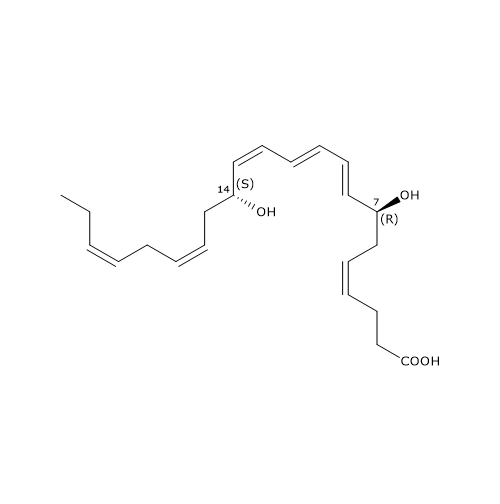
14S-hydroperoxy-DHA can undergo a second oxygenation catalyzed by 5-lipoxygenase, resulting in the formation of 7S,14S-dihydroxy-DHA (E,Z,E), an isomer of MaR1.[1]
MaR2 (13R,14S-diHDHA) is synthesized from the intermediate 13S,14S-epoxymaresin in a reaction catalyzed by soluble epoxide hydrolase (EC 3.3.2.10). Like MaR1, it has a conjugated triene, but with a Z,E,E geometry.[13]
MCTRs
The family of molecules known as MCTRs, an acronym for “maresin conjugates in tissue regeneration”, is derived from 13S,14S-epoxymaresin.
First to be synthesized is MCTR1 (13R-glutathionyl,14S-HDHA) in a reaction in which 13S,14S-eMaR reacts with glutathione. This reaction can be catalyzed by two enzymes belonging to the glutathione S-transferase family: leukotriene C4 synthase or LTC4S (EC 4.4.1.20) and GSTM4 (EC 2.5.1.18).
γ-Glutamyl transferase (EC 2.3.2.2), the second enzyme involved, catalyzes the removal of the γ-glutamyl moiety from MCTR1, resulting in the formation of MCTR2 (13R-cysteinylglycinyl,14S-HDHA).
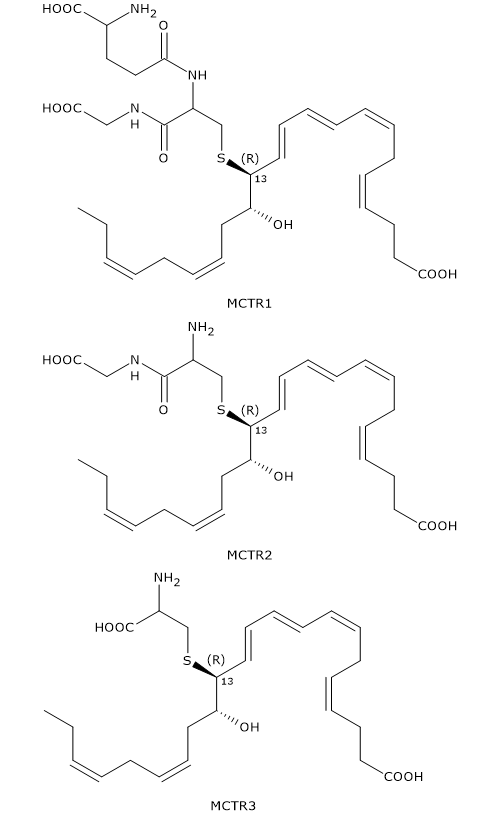
Finally, in a reaction catalyzed by a dipeptidase, the bond between the cysteine and glycine residues of MCTR2 is cleaved, forming the third member of the family: MCTR3 (13R-cysteinyl,14S-HDHA).
The molecules belonging to this family, like MaR2, feature a Z,E,E-conjugated triene.[14][15]
Maresin-L1 and maresin-L2
Moving from macrophages to platelets and leukocytes, the production of DHA derivatives known as maresins-L has been observed, specifically MaR-L1 (14S,22-diHDHA) and MaR-L2 (14R,22-diHDHA).[16]
The biosynthetic pathway leading to the production of MaR-L1 begins with the intermediate 14S-hydroperoxy-DHA, which is reduced to 14S-HDHA in a reaction catalyzed by a peroxidase.[1]
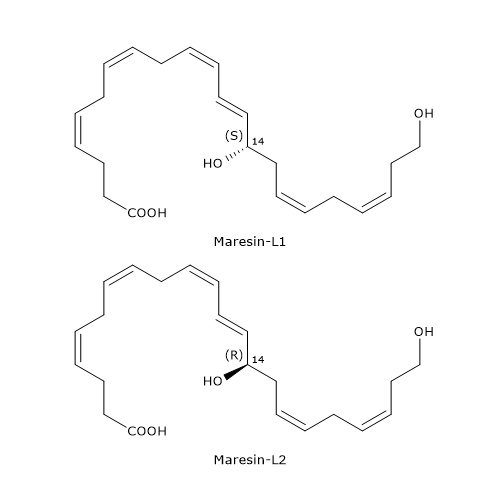
In the next step, 14S-HDHA undergoes oxidation at position 22, catalyzed by enzymes belonging to the cytochrome P450 family, resulting in the formation of MaR-L1.[17]
The biosynthesis of MaR-L2 requires the catalytic action of cytochrome P450; DHA can also be converted to 14R-HDHA, which in turn can undergo hydroxylation at position 22, again catalyzed by cytochrome P450, to yield MaR-L2.[16]
| Class | Designation | Precursor and biosynthetic pathway | Structural features and IUPAC nomenclature |
|---|---|---|---|
| Classic maresins | Maresin 1 (MaR1) | DHA via 12-LOX/13S,14S-epoxide | 7R,14S-dihydroxy-docosa-4Z,8E,10E,12Z,16Z,19Z-hexaenoic acid |
| Maresin 2 (MaR2) | DHA via 12-LOX/13S,14S-epoxide | 13R,14S-dihydroxy-docosa-4Z,7Z,9E,11E,16Z,19Z-hexaenoic acid | |
| Peptidolipid conjugates (MCTRs) | MCTR1 | DHA via 12-LOX and glutathione S-transferase | 13-glutathionyl-14-hydroxy-docosa-4Z,7Z,9E,11E,16Z,19Z-hexaenoic acid |
| MCTR2 | MCTR1 via γ-glutamyl transferase | 13-cysteinylglycinyl-14-hydroxy-docosa-4Z,7Z,9E,11E,16Z,19Z-hexaenoic acid | |
| MCTR3 | MCTR2 via dipeptidase | 13-cysteinyl-14-hydroxy-docosa-4Z,7Z,9E,11E,16Z,19Z-hexaenoic acid | |
| Leukocyte-derived (MaR-L) | Maresin-L1 (MaR-L1) | DPA/DHA via 12-LOX (phagocytes/platelets) | Dihydroxylated isomer with conjugated triene in 14S-hydroxylated configuration |
| Maresin-L2 (MaR-L2) | DPA/DHA via 12-LOX (phagocytes/platelets) | Stereospecific dihydroxylated isomer derived from C-14 oxygenation |
Molecular mechanisms
The molecular effects of maresins occur following their binding to specific membrane receptors.
In the case of maresin 1, the molecule binds to the LGR6 receptor, a G-protein-coupled receptor expressed on the membrane of macrophages and phagocytes. The interaction between MaR1 and LGR6 activates intracellular signaling cascades that increase cAMP production and coordinate the resolution response, stimulating phagocytic capacity without triggering cytotoxic or pro-inflammatory responses.[18]
As for MaR2 and MCTR conjugates, additional specific GPCR receptors and distinct signaling pathways appear to be involved in the regulation of organogenesis and tissue regeneration.[19][20]
Cellular mechanisms
At the cellular level, one of the primary functions of maresins is their ability to promote the phenotypic switch of macrophages.
During the acute phase of inflammation, macrophages predominantly adopt a pro-inflammatory phenotype, characterized by the secretion of inflammatory cytokines, such as TNF-α and interleukin-6, and the generation of reactive oxygen species. MaR1 and MaR2 induce the reprogramming of macrophages toward a pro-resolving and reparative phenotype.[12]
This phenotypic shift shuts down the production of pro-inflammatory cytokines, inhibits the recruitment of additional neutrophils, and strongly stimulates efferocytosis, that is, the process of clearing and removing apoptotic neutrophils and cellular debris via phagocytosis, an essential step for the restoration of tissue homeostasis.[3]
Nutritional implications
The endogenous synthesis of maresins and other SPMs depends on the availability of their precursors, namely, long-chain omega-3 fatty acids, particularly DHA and DPA. Because the human body is only moderately efficient at converting ALA, one of the essential fatty acids, along with linoleic acid, into DHA, dietary intake plays a decisive role in the efficiency of resolution processes.[4]
The current Western diet, characterized by a high ratio of omega-6 to omega-3 polyunsaturated fatty acids, sets the stage for a condition known as “resolution deficit.”[9] In the absence of an adequate dietary intake of DHA, the ability of macrophages to generate sufficient concentrations of maresins is compromised, contributing to the failure to resolve inflammation and promoting the transition from an acute inflammatory process to a state of low-grade chronic inflammation, a pathogenesis underlying numerous metabolic, cardiovascular, and neurodegenerative diseases.[10]
References
- a b c Serhan C.N., Yang R., Martinod K., Kasuga K., Pillai P.S., Porter T.F., Oh S.F., Spite M. Maresins: novel macrophage mediators with potent antiinflammatory and proresolving actions. J Exp Med 2009;206(1):15-23. doi:10.1084/jem.20081880
- a b Berrocal-Navarrete F., Marín-Sanhueza P., Norambuena-González R., Quiñones San Martín M., Herrera-Vielma F., González D.R., Zúñiga-Hernández J. Maresins. Biomolecules 2026;16(1):139. doi:10.3390/biom16010139
- a b c Serhan C.N., Dalli J., Karamnov S., Choi A., Park C.K., Xu Z.Z., Ji R.R., Zhu M., Petasis N.A. Macrophage proresolving mediator maresin 1 stimulates tissue regeneration and controls pain. FASEB J 2012;26(4):1755-65. doi:10.1096/fj.11-201442
- a b Gerster H. Can adults adequately convert alpha-linolenic acid (18:3n-3) to eicosapentaenoic acid (20:5n-3) and docosahexaenoic acid (22:6n-3)? Int J Vitam Nutr Res 1998;68(3):159-73.
- ^ Burdge G.C., Wootton S.A. Conversion of α-linolenic acid to eicosapentaenoic, docosapentaenoic and docosahexaenoic acids in young women. Br J Nutr 2002;88(4):411-420. doi:10.1079/BJN2002689
- ^ Giltay E.J., Gooren L.J., Toorians A.W., Katan M.B., Zock P.L. Docosahexaenoic acid concentrations are higher in women than in men because of estrogenic effects. Am J Clin Nutr 2004;80(5):1167-1174. doi:10.1093/ajcn/80.5.1167
- ^ Dyerberg J., Bang H.O., Hjorne N. Fatty acid composition of the plasma lipids in Greenland Eskimos. Am J Clin Nutr 1975;28:958-966. doi:10.1093/ajcn/28.9.958
- ^ Levy B.D., Clish C.B., Schmidt B., Gronert K., Serhan C.N. Lipid mediator class switching during acute inflammation: signals in resolution. Nat Immunol 2001;2(7):612-9. doi:10.1038/89759
- a b Serhan C.N. Pro-resolving lipid mediators are leads for resolution physiology. Nature 2014;510(7503):92-101. doi:10.1038/nature13479
- a b Chiang N., Serhan C.N. Specialized pro-resolving mediator network: an update on production and actions. Essays Biochem 2020;64(3):443-462. doi:10.1042/EBC20200018
- ^ Haeggström J.Z., Funk C.D. Lipoxygenase and leukotriene pathways: biochemistry, biology, and roles in disease. Chem Rev 2011;111(10):5866-98. doi:10.1021/cr200246d
- a b c Dalli J., Zhu M., Vlasenko N.A., Deng B., Haeggström J.Z., Petasis N.A., Serhan C.N. The novel 13S,14S-epoxy-maresin is converted by human macrophages to maresin 1 (MaR1), inhibits leukotriene A4 hydrolase (LTA4H), and shifts macrophage phenotype. FASEB J 2013;27(7):2573-83. doi:10.1096/fj.13-227728
- ^ Deng B., Wang C.W., Arnardottir H.H., Li Y., Cheng C.Y., Dalli J., Serhan C.N. Maresin biosynthesis and identification of maresin 2, a new anti-inflammatory and proresolving mediator from human macrophages. PLoS One 2014;9(7):e102362. doi:10.1371/journal.pone.0102362
- ^ Dalli J., Vlasakov I., Riley I.R., Rodriguez A.R., Spur B.W., Petasis N.A, Chiang N., Serhan C.N. Maresin conjugates in tissue regeneration biosynthesis enzymes in human macrophages. Proc Natl Acad Sci USA 2016;113(43):12232-12237. doi:10.1073/pnas.1607003113
- ^ Dalli J., Sanger J.M., Rodriguez A.R., Chiang N., Spur B.W., Serhan C.N. Identification and actions of a novel third maresin conjugate in tissue regeneration: MCTR3. PLoS One 2016;11(2):e0149319. doi:10.1371/journal.pone.0149319
- a b Hong S., Lu Y., Tian H., Alapure B.V., Wang Q., Bunnell B.A., Laborde J.M. Maresin-like lipid mediators are produced by leukocytes and platelets and rescue reparative function of diabetes-impaired macrophages. Chem Biol 2014;21:1318-1329. doi:10.1016/j.chembiol.2014.06.010
- ^ Shoieb S.M., El-Ghiaty M.A., Alqahtani M.A., El-Kadi A.O.S. Cytochrome P450-derived eicosanoids and inflammation in liver diseases. Prostaglandins Other Lipid Mediat 2020;147:106400. doi:10.1016/j.prostaglandins.2019.106400
- ^ Zhao M., Li C., Zhang J., Yin Z., Zheng Z., Wan J., Wang M. Maresin-1 and its receptors RORα/LGR6 as potential therapeutic target for respiratory diseases. Pharmacol Res 2022;182:106337. doi:10.1016/j.phrs.2022.106337
- ^ Olsen M.V., Lyngstadaas A.V., Bair J.A., Hodges R.R., Utheim T.P., Serhan C.N., Dartt D.A. Signaling pathways used by the specialized pro-resolving mediator maresin 2 regulate goblet cell function: comparison with maresin 1. Int J Mol Sci 2022;23(11):6233. doi:10.3390/ijms23116233
- ^ Chiang N., Riley I.R., Dalli J., Rodriguez A.R., Spur B.W., Serhan C.N. New maresin conjugates in tissue regeneration pathway counters leukotriene D4-stimulated vascular responses. FASEB J 2018;32(7):4043-4052. doi:10.1096/fj.201701493R
Domande Frequenti
What are maresins and what is their role in inflammation?
Maresins are bioactive lipid mediators produced by macrophages, platelets, and leukocytes from DHA. Their primary function is to promote active resolution of inflammation, tissue repair, and clearance of apoptotic neutrophils during injury.
How are maresins synthesized from precursor docosahexaenoic acid?
Biosynthesis starts with C-14 oxygenation of DHA by 12-lipoxygenase, forming an epoxide intermediate that is enzymatically converted into distinct maresin families (MaR1, MaR2, MCTRs, and MaR-Ls) within macrophages, platelets, and leukocytes.
Why is dietary DHA intake essential for maresin production?
Because endogenous conversion of alpha-linolenic acid (ALA) to DHA is very low in humans (0-4%), direct dietary DHA intake is crucial to maintain adequate substrate levels for maresin synthesis and prevent resolution deficits.