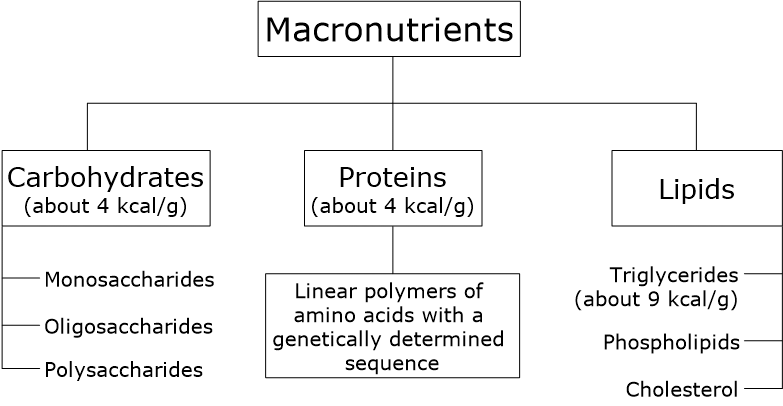
Macronutrients are nutrients that we need in large amounts to maintain health and support vital functions. They fall into three main categories: carbohydrates, proteins, and lipids.[1]
They are present in almost all foods, although often in very different quantities. This is why it is important to eat a good variety of foods. A balanced diet ensures precisely this: an appropriate proportion of carbohydrates, proteins, and lipids to meet the body’s energy and nutritional requirements.[2]
An excess or deficiency of any of these macronutrients can contribute to the development of metabolic disorders. For example, excessive consumption of refined carbohydrates can increase the risk of obesity and type 2 diabetes, especially when associated with reduced physical activity, while a protein deficiency can lead to loss of muscle mass and a weakening of the immune system. Similarly, excessive consumption of saturated fatty acids is associated with a higher risk of developing cardiovascular disease.[3]
Summary: Key Points
- Definition and categories: macronutrients are essential nutrients required in large amounts to sustain vital functions. They are classified into carbohydrates, proteins, and lipids.
- Balanced nutrition: a balanced diet ensures the correct proportion of these nutrients. Excesses or deficiencies contribute to the development of metabolic and cardiovascular disorders.
- Carbohydrates and fibers: carbohydrates are divided into mono-, oligo-, and polysaccharides. Soluble fibers are fermented by the gut microbiota into short-chain fatty acids.
- Proteins and amino acids: critical for tissue repair and biological functions. Animal sources provide all essential amino acids, whereas plant-based sources require strategic combining.
- Lipids and triglycerides: serving as the primary energy reserve (9 kcal/g versus 4 kcal for carbohydrates and proteins), they form cell membranes and assist fat-soluble vitamin absorption, requiring a strict balance of saturated and unsaturated fatty acids.
Contents
Macronutrients: carbohydrates
Carbohydrates are organic compounds made up of carbon, hydrogen, and oxygen, though some also contain sulfur and nitrogen. Most have the general formula (CH2O)n.
Based on their structural complexity, these macronutrients can be classified into three categories.[4]
- Monosaccharides, such as glucose, fructose, and galactose. They are the simplest carbohydrates and are the building blocks used to make more complex carbohydrates.
- Oligosaccharides, which are short chains of monosaccharides, between 2 and 20 units long. Disaccharides are the most common; examples are sucrose, which is common table sugar, lactose, which is milk sugar, maltose, and trehalose.
- Polysaccharides, which are polymers formed by more than 20 monosaccharide units. Examples are starch, glycogen, chitin, and cellulose. Oligosaccharides and polysaccharides are formed by monosaccharides linked through glycosidic bonds.[5]
What carbohydrates do
Carbohydrates perform multiple functions.
They are a rapidly available source of energy, even under anaerobic conditions, through glycolysis. Their energy content varies slightly between monosaccharides, oligosaccharides, and polysaccharides. Monosaccharides provide 3.74 kcal per gram (15.6 kJ per gram), disaccharides 3.95 kcal per gram (16.5 kJ per gram), while starch provides 4.18 kcal per gram (17.5 kJ per gram). Therefore, on average, it is possible to approximate to 4 kcal per gram (16.7 kJ per gram).[6]
Glucose can also be stored as glycogen in the liver and muscles to be used during periods of physical activity or fasting.[5]
Fibers are polymeric carbohydrates that are not hydrolyzed by human digestive enzymes and therefore not absorbed. Technically, they would not be classified as macronutrients. However, while insoluble fibers pass through the intestine unchanged, soluble fibers are metabolized by the gut microbiota to produce short-chain fatty acids that have energy and regulatory functions for colonocytes.[7] Additionally, fibers are able to sequester cholesterol and bile salts, thus exerting a hypocholesterolemic effect.[8][9]
Beyond their energetic function, carbohydrates are involved in cell recognition and communication, thanks to their presence in membrane glycoproteins and glycolipids.
They are also part of the structural backbone of DNA and RNA and participate in liver detoxification processes as precursors of glucuronic acid.
Finally, they are necessary for normal lipid metabolism and, when adequately present in the diet, allow for protein savings.[1]
For healthy adults, the recommended daily intake is 45–60% of the daily caloric intake, which can reach up to 65% in the case of very intense physical activity. Monosaccharides and disaccharides, also known as simple sugars, should not exceed 15% of the daily caloric intake. To prevent ketosis, the minimum carbohydrate requirement is 2 g per kg of body weight.[10]
Foods high in carbohydrates
The main sources of carbohydrates in the human diet are cereals, such as corn, wheat, spelt, barley, rice, oats, millet, rye, and their derivatives, such as bread and pasta. Potatoes and legumes are also rich sources of these macronutrients. In these foods, carbohydrates are predominantly found in the form of starch.[7]
Fruit, vegetables, and fresh dairy products contain smaller amounts of carbohydrates, generally represented by fructose, glucose, sucrose, and lactose. It should be noted that milk and dairy products are the only significant animal source of carbohydrates, as glycogen content in animal tissues is virtually negligible.[2]
Finally, some foods are composed almost entirely of carbohydrates. Excluding honey, they are all processed foods such as maltodextrin, table sugar, candies, fruit juices, and soft drinks.
Macronutrients: proteins
Proteins are macromolecules made up of chains of at least 20 different types of amino acids. Amino acids are linked through peptide bonds in unique, genetically determined sequences to form proteins with specific functions.[4]
Proteins can be of animal or plant origin.
Those of animal origin are considered qualitatively superior to those of plant origin as they provide sufficient quantities of all essential amino acids, namely those that we are unable to produce.
Plant-based proteins are often deficient in one or more essential amino acids. However, it is possible to obtain an adequate intake of essential amino acids by correctly combining plant proteins of different origins, which complement each other.[11]
It should be noted that, although animal protein sources tend to have a higher biological value, plant proteins are often associated with a higher content of vitamins, minerals, and fiber, in addition to containing fewer saturated fatty acids. On the other hand, plant proteins may be accompanied by substances that can interfere with their intestinal absorption, such as tannins, phytates, and saponins, reducing their bioavailability.[12]
What proteins do
This class of macronutrients performs a wide range of functions in the human body.
They are essential for the growth and repair of tissues, constitute the enzymes that catalyze biochemical reactions, form various hormones and antibodies, and are fundamental for cellular structure, movement, nerve impulse transmission, as well as in the transport of oxygen.[1]
Furthermore, proteins can be used as an energy source, especially when carbohydrate intake is insufficient. They provide approximately 4 kcal per gram (16.7 kJ per gram), similar to the energy yield provided on average by carbohydrates.[6]
Daily protein requirements vary depending on age, gender and to a small extent on physical activity level, and other specific conditions, such as breastfeeding and pregnancy. For healthy adults, excluding pregnant or breastfeeding women, a daily intake of 0.9 g per kg of body weight is recommended up to the age of 60 years, increasing to 1.1 g per kg of body weight after the age of 60.[10]
Animal foods high in proteins
In human nutrition, proteins come from animal or plant sources.
Below are some of the main sources of animal proteins.[2]
| Food category | Main examples | Amino acid profile and associated substances |
|---|---|---|
| Meat and derivatives | Beef, pork, lamb, chicken, turkey, cold cuts, sausages | Provide high biological value proteins with all essential amino acids. They may supply varying amounts of saturated fatty acids and cholesterol; processed meats often contain sodium and preservatives. |
| Fish, mollusks, and crustaceans | Salmon, mackerel, cod, sea bream, clams, shrimp | Excellent digestibility and complete amino acid profile. Fatty varieties are particularly rich in cardioprotective and anti-inflammatory omega-3 polyunsaturated fatty acids (EPA and DHA). |
| Eggs | Whole chicken eggs (egg white and yolk) | Considered the gold standard for biological value (maximum amino acid score). The white contains pure proteins (ovalbumin), while the yolk concentrates lipids, cholesterol, iron, and fat-soluble vitamins. |
| Dairy products | Milk, yogurt, fresh and aged cheeses | Rich in high biological value whey proteins and caseins. They supply significant amounts of bioavailable calcium and phosphorus, along with varying amounts of saturated fatty acids and lactose. |
Plant-based foods high in proteins
Below are some of the main sources of plant proteins.[2]
| Food category | Main examples | Amino acid profile, bioavailability, and associated Substances |
|---|---|---|
| Legumes | Lentils, beans, chickpeas, peas, grass peas | Good overall protein content. Methionine is the limiting amino acid, but they are rich in lysine. They contain soluble fiber and low-glycemic index carbohydrates. |
| Soy-based products | Tofu, tempeh, edamame, miso, soy beverage | A distinct exception in the plant kingdom as they offer an almost complete amino acid profile and high biological value. They contain isoflavones and predominantly unsaturated fats. |
| Whole grains | Whole wheat, brown rice, spelt, barley, oats | Provide moderate protein amounts. Lysine is the limiting amino acid, while they are rich in sulfur-containing amino acids (methionine and cysteine). Rich in insoluble fiber and B-complex vitamins. |
| Nuts and seeds | Walnuts, almonds, hazelnuts, flaxseeds, chia seeds, sunflower seeds | Supply protein alongside high energy density. They have variable limiting amino acids but represent excellent sources of essential fatty acids, vitamin E, and minerals. |
The limited availability of essential amino acids in plant proteins can be addressed through specific combinations, such as cereals and legumes, and legumes and seeds/nuts.[11]
Protein powders derived, for example, from whey, soy, or peas are also available, as well as fortified foods enriched with proteins.
Macronutrients: lipids
Lipids, or fats, are a category of organic molecules composed mainly of carbon, hydrogen, and oxygen, with diverse chemical structures that may include cyclic structures.[13]
The most common fats in the diet are triglycerides, made up of a glycerol molecule linked to three fatty acids that can be saturated and/or unsaturated, the relative percentages of which influence the physical and biological properties of the molecule.
Other members of this class of macronutrients are phospholipids, glycolipids, sterols, such as cholesterol, fat-soluble vitamins, and carotenoids, all of which are present in the human diet in much smaller amounts than triglycerides.[14]
What lipids do
Within this class of macronutrients, triglycerides, or more specifically, the fatty acids that compose them, are one of the main sources of energy for the body and provide about 9 kcal per gram (37.7 kJ per gram), more than double the energy of carbohydrates and proteins.[6]
In addition to their energy function, lipids are essential for the formation of cell membranes, the production of steroid hormones, thermal insulation, nerve impulse transmission, and the protection of vital organs.
Furthermore, they facilitate the absorption of fat-soluble vitamins and are involved in cellular signaling pathways.[13]
For healthy adults, including pregnant and breastfeeding women, the recommended daily intake is 20–30% of the daily caloric intake, distributed as follows:
- saturated fatty acids should account for less than 10% of the daily caloric intake;
- unsaturated fatty acids should include 5–10% polyunsaturated fatty acids, with 4–8% from omega-6 polyunsaturated fatty acids and 0.5–2% from omega-3 fatty acids.[10]
Trans fatty acids should be avoided as their presence, alongside excessive intake of saturated fatty acids, is linked to an increased risk of developing various diseases, such as cardiovascular diseases.[3]
The daily intake of cholesterol, which cannot be used for energy, should remain below 300 mg/day.[10]
Animal foods high in lipids
Like proteins, dietary fats can come from both animal and plant sources.
Below are some of the main sources of animal fats.[13]
| Food category | Main examples | Prevalent lipid composition and health impact |
|---|---|---|
| Animal fats for seasoning | Butter, lard, suet | Composed almost entirely of lipids, solid at room temperature. They are rich in saturated fatty acids and cholesterol. Consumption should be limited due to cardiovascular risk. |
| Meat and processed products | Fatty cuts of beef and pork, sausages, poultry skin | Contain a mixture of saturated and monounsaturated fatty acids, alongside cholesterol. Excessive consumption, especially of processed meats, is linked to dysmetabolic diseases. |
| Full-fat dairy products | Aged cheeses, heavy cream, blue cheeses | Present a high concentration of triglycerides rich in short- and medium-chain saturated fatty acids, as well as cholesterol. They also supply fat-soluble nutrients like vitamin A. |
| Fatty seafood | Salmon, mackerel, herring, sardines, cod liver | An exception in the animal kingdom due to their exceptional content of long-chain omega-3 polyunsaturated fatty acids (EPA/DHA), which protect the cardiovascular system. |
Plant-based foods high in lipids
In the Western diet, many fats come from plant sources and are often found in processed foods like ready-made meals and baked goods. Below are some examples of foods rich in plant-based lipids.[14]
| Food category | Main examples | Prevalent lipid composition and health impact |
|---|---|---|
| Unsaturated vegetable oils | Extra virgin olive oil, sunflower oil, corn oil, soybean oil | 100% lipids, liquid at room temperature. Olive oil, the cornerstone of the Mediterranean diet, excels in oleic acid (monounsaturated) and antioxidants (polyphenols). Seed oils are rich in linoleic acid (omega-6). |
| Saturated vegetable oils | Coconut oil, palm oil | An exception in the plant kingdom as they are rich in saturated fatty acids (such as lauric, myristic, and palmitic acids). Frequently used in the food industry for their oxidative stability. |
| Nuts and oilseeds | Walnuts, almonds, flaxseeds, chia seeds, pumpkin seeds | Provide high lipid density, predominantly composed of polyunsaturated and monounsaturated fatty acids. Walnuts, flaxseeds, and chia seeds stand out for supplying alpha-linolenic acid (omega-3). |
| Fat-containing fresh fruit | Avocado | Unique among fresh fruits for its significant fat content (around 15%), primarily represented by oleic acid (monounsaturated), associated with dietary fiber and potassium. |
| Hydrogenated fats and substitutes | Vegetable margarine, hydrogenated or partially hydrogenated vegetable fats | Industrial products that may contain trans fatty acids resulting from the partial hydrogenation of vegetable oils. Strictly correlated with a significant increase in cardiovascular risk. |
References
- a b c Stipanuk M.H., Caudill M.A. Biochemical, physiological, and molecular aspects of human nutrition. 4th Edition. St. Louis: Elsevier, 2018.
- a b c d Raymond J.L., Morrow K. Krause and Mahan’s food & the nutrition care process. 15th Edition. Elsevier. April 27, 2020.
- a b Bechthold A., Boeing H., Schwedhelm C., Hoffmann G., Knüppel S., Iqbal K., De Henauw S., Michels N., Devleesschauwer B., Schlesinger S., Schwingshackl L. Food groups and risk of coronary heart disease, stroke and heart failure: A systematic review and dose-response meta-analysis of prospective studies. Crit Rev Food Sci Nutr 2019;59(7):1071-1090. doi:10.1080/10408398.2017.1392288
- a b Nelson D.L., Cox M.M. Lehninger. Principles of biochemistry. 8th Edition. W.H. Freeman and Company, 2021.
- a b Garrett R.H., Grisham C.M. Biochemistry. 7th Edition. Cengage Learning, 2023.
- a b c Bender D.A. Benders’ dictionary of nutrition and food technology. 8th Edition. Woodhead Publishing. Oxford, 2006.
- a b Kiely L.J., Hickey R.M. Characterization and analysis of food-sourced carbohydrates. Methods Mol Biol 2022;2370:67-95. doi:10.1007/978-1-0716-1685-7_4
- ^ Brown L., Rosner B., Willett W.W., Sacks F.M. Cholesterol-lowering effects of dietary fiber: a meta-analysis. Am J Clin Nutr 1999;69(1):30-42. doi:10.1093/ajcn/69.1.30
- ^ Soliman G.A. Dietary fiber, atherosclerosis, and cardiovascular disease. Nutrients 2019;11(5):1155. doi:10.3390/nu11051155
- a b c d LARN. Livelli di assunzione di riferimento di nutrienti ed energia per la popolazione italiana. V revisione. 2024.
- a b EUFIC. Plant-based protein: all you need to know to get enough of it. Last updated: 05 January 2022.
- ^ Marinangeli C.P.F., House J.D. Potential impact of the digestible indispensable amino acid score as a measure of protein quality on dietary regulations and health. Nutr Rev 2017;75(8):658-667. doi:10.1093/nutrit/nux025
- a b c Akoh C.C., Min D.B. Food lipids: chemistry, nutrition, and biotechnology. 4th Edition. Boca Raton: CRC Press, 2017. doi:10.1201/9781315151854
- a b Chow C.K. Fatty acids in foods and their health implication. 3rd Edition. 2008. doi:10.1201/9781420006902
Domande Frequenti
What is the main difference between animal and plant-based dietary proteins?
Animal proteins are biologically complete, providing all essential amino acids in appropriate amounts. Plant proteins often lack one or more essential amino acids (limiting amino acids) but can easily complement each other when different sources, like grains and legumes, are combined.
How many calories do the different macronutrients provide per gram?
Carbohydrates and proteins provide an average of about 4 kcal per gram, though carbohydrates show slight variations between monosaccharides and starch. Lipids are the most energy-dense macronutrient, yielding approximately 9 kcal per gram, which is more than double.
Why is soluble dietary fiber important if the human body cannot absorb it?
Though undigested by human enzymes, soluble fiber is fermented by the gut microbiota into short-chain fatty acids that nourish colonocytes and exert regulatory functions. Additionally, it can bind cholesterol and bile salts in the intestine, exerting a hypocholesterolemic effect.