Trans fatty acids (TFAs) are unsaturated fatty acids, a subclass of lipids, with at least one double bond in the trans configuration.[1]
They may result from industrial or domestic processes involving fats rich in unsaturated fatty acids, be produced by bacterial metabolism in the rumen of ruminants, and thus end up in derived foods, or be naturally present in certain plant species.[2]
At an industrial level, their presence in fats and oils offers advantages in terms of preservation and transport.[3]
From a human health perspective, consuming a diet containing trans fatty acids offers no benefits or nutritional value, and is solely a major, and well-established, risk factor for cardiovascular disease, even in small quantities.[4][5][6][7] For these reasons, since 2006, following health guidance and global legal bans, their consumption has been restricted or eliminated entirely.[8][9][10]
Summary: Key Points
- Origins and chemistry: trans fatty acids originate primarily from the industrial partial hydrogenation of vegetable oils and bacterial transformation in the rumen of livestock, with minor natural occurrences in specific plants.
- Health impacts of industrial TFAs: industrial trans fatty acids are exclusively harmful and actively promote systemic inflammation, endothelial dysfunction, and coronary heart disease (CHD).
- Ruminant TFAs: unlike industrial TFAs, ruminant trans fatty acids, when consumed at typical dietary levels, show no significant association with an increased risk of CHD.
- Global legislation: overwhelming scientific consensus has driven strict regulatory actions worldwide, culminating in federal bans in North America and a binding European Union standard restricting industrial TFAs to a maximum of 2 g/100 g of fat.
- Food sources and reformulation: industrial trans fatty acids have been largely and successfully replaced by food manufacturers with healthier cis-unsaturated or balanced lipid mixtures.
Contents
- Chemical properties
- Sources and formation of trans fatty acids
- Isomers
- Industrial trans fatty acids and human health
- Ruminant trans fatty acids and human health
- Regulatory measures on TFA content
- Food reformulation
- Food sources
- References
Chemical properties
Trans fatty acids, also known as trans-unsaturated fatty acids or trans fats, are unsaturated fatty acids with one or more double bonds in the trans configuration.[1]
Carbon-carbon double bonds involve sp2 hybridized carbon atoms, which dictate a rigid, trigonal planar conformation. Consequently, the carbon atoms and their adjacent single-bond connections lie in the same plane, with restricted rotation around the π bond. The continuation of the carbon chain can emerge on the same side of this reference plane, yielding the cis configuration, or on opposite sides, resulting in the trans configuration. This is a classic example of geometric isomerism, also called cis-trans isomerism.[11]
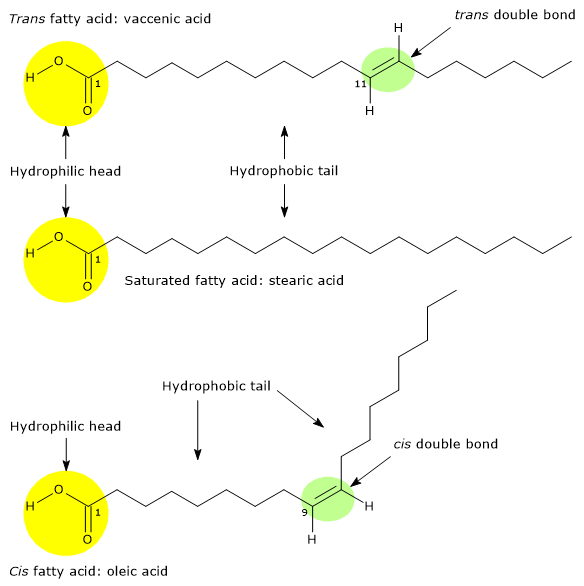
Unsaturated fatty acids most commonly have their double bonds in the cis configuration; the other, less common configuration is trans. A cis bond introduces a distinct bend or ‘kink’ in the hydrocarbon chain, whereas the geometry of a trans bond keeps the chain straight and extended, imparting a structure more closely resembling that of saturated fatty acids.[1]
Commercial advantages
The chemical nature and three-dimensional structure of trans fatty acids, which closely resemble those of saturated fatty acids, confer major practical advantages on the fats in which they are present in large quantities.
While bent molecules cannot pack together easily, linear ones can do so efficiently. This molecular geometry allows trans fatty acids, alongside saturated fatty acids, to pack more tightly and contribute significantly to the hardness and higher melting point of the fats in which they are present.
Elevating the melting point makes it possible to convert liquid oils into semi-solid and solid fats at room temperature. Although trans fats tend to be slightly less solid than pure saturated fatty acids, they yield a melting point, consistency, and mouthfeel very similar to those of butter.
Building on these structural features, fats rich in trans fats exhibit exceptional stability: they offer long shelf lives at room temperature, excellent flavor stability, and high resistance during frying.
These distinctive characteristics make them particularly well-suited for the production of margarines and vegetable shortenings widely used in home cooking, commercial food preparation, and large-scale manufacturing processes.[3]
| Fatty acid class and example | Molecular geometry | Spatial packing and fluidity | Melting point range (°C) | Oxidative stability and shelf-life | Commercial and functional role |
|---|---|---|---|---|---|
| cis-Unsaturated (e.g., oleic acid C18:1 Δ9c) |
Kinked/Rigid bent chain | Loosely packed; high membrane fluidity | ≈ 13 °C to 16 °C (liquid at room temp) | Moderate; vulnerable to oxidation and rancidity | Liquid cooking oils; maintains cell membrane fluidity |
| trans-Unsaturated (e.g., elaidic acid C18:1 Δ9t) |
Linear/Extended chain | Tightly packed; reduced fluidity | ≈ 43 °C to 45 °C (semi-solid / solid) | High stability; resistant to thermal breakdown | Baking shortenings, margarines, industrial deep frying |
| Saturated fatty acid (e.g., Stearic acid C18:0) |
Fully extended straight chain | Maximal packing density; rigid structure | ≈ 69 °C to 70 °C (solid at room temp) | Very high stability; highly resistant to oxidation | Solid fats, baking, texture and structure agent |
Sources and formation of trans fatty acids
Dietary TFAs come from different sources.
In industrialized countries, the greater part of the consumed trans fatty acids are produced industrially, in varying amounts, during partial hydrogenation of edible oils containing unsaturated fatty acids.[1]
They are produced at home during frying with vegetable oils containing unsaturated fatty acids.[3]
They come from bacterial transformation of unsaturated fatty acids ingested by ruminants in their rumen.
Another natural source is represented by some plant species, such as leeks, peas, lettuce and spinach, that contain trans-3-hexadecenoic acid, and rapeseed oil, that contains brassidic acid (22:1∆13t) and gondoic acid (20:1∆11t). In these sources trans fatty acids are present in small amounts.[2][12]
Very small amounts, less than 2%, are formed during deodorization of vegetable oils, a process necessary in the refining of edible oils. During this process trans fatty acids with more than one double bond are formed in small amounts. These isomers are also present in fried foods and in considerable amounts in some partially hydrogenated vegetable oils.[13]
Partial hydrogenation of vegetable oils
Hydrogenation is a chemical reaction in which hydrogen atoms, in the presence of a catalyst, react with a molecule.
This process was first discovered in 1897 by the French chemist Paul Sabatier, who later won the Nobel Prize in Chemistry jointly with Victor Grignard, using a nickel catalyst.[14]
The hydrogenation of unsaturated fatty acids involves the addition of hydrogen atoms to double bonds on the carbon chains of fatty acids. The reaction occurs in presence of metal catalyst and hydrogen, and is favored by heating vegetable oils containing unsaturated fatty acids.[11]
During partial hydrogenation, an incomplete saturation of the unsaturated sites on the carbon chains of unsaturated fatty acids occurs. For example, with regard to fish oil, trans fatty acid content in non-hydrogenated oils and in highly hydrogenated oils is 0.5% and 3.6%, respectively, whereas in partially hydrogenated oils it is 30%.[15]
Moreover, some of the remaining cis double bonds may shift in their positions on the carbon chain, producing geometrical and positional isomers, that is, double bonds can be modified in both conformation and position. Finally, other changes that occur during partial hydrogenation are that alpha-linolenic acid, the plant-based omega-3 polyunsaturated fatty acid, is largely destroyed, and cyclic monomers, as well as intramolecular linear dimers, are also formed.[2]
Historical background
Partially hydrogenated vegetable oils were developed in 1903 by a German chemist, Wilhelm Normann, who filed a British patent on “Process for converting unsaturated fatty acids or their glycerides into saturated compounds”. The term trans fatty acids or trans fats appeared for the first time in the Remark column of the 5th edition of the “Standard Tables of Food Composition” in Japan.[16]
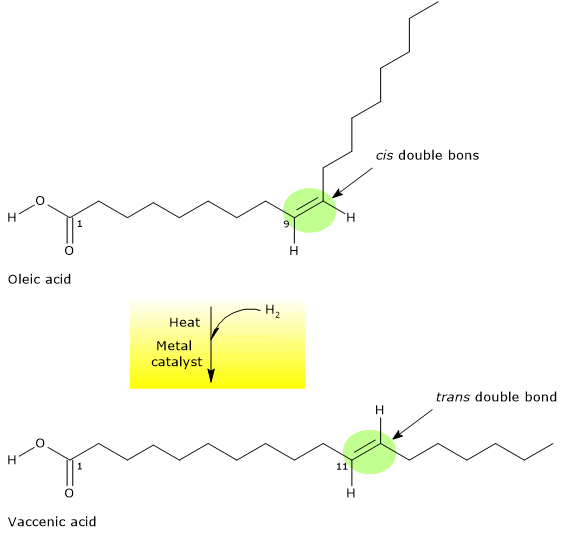
Partially hydrogenated vegetable oils were developed for the production of vegetable fats, a cheaper alternative to animal fats. In fact, through hydrogenation, oils such as soybean, safflower and cottonseed oils, which are rich in unsaturated fatty acids, are converted into semi-solid fats.[1]
The first hydrogenated oil was cottonseed oil used in the USA in 1911 to produce vegetable shortening.
In the 1930s, partial hydrogenation became popular with the development of margarine.
Currently, per year in USA, 3-3,5 million tons of hydrogenated vegetable oil are produced.[1][2][3]
Ruminant trans fatty acids
Ruminant trans fats are produced by bacteria in the rumen of the animals, for example cows, sheep and goats, using as a substrate a proportion of the relatively small amounts of unsaturated fatty acids present in their feedstuffs, that is, feed, plants and herbs.[12]
Considering an animal that lives at least a year, and has the opportunity to graze and/or eat hay, there is a season variability in unsaturated fatty acids intake, and trans fats produced. In fact, in summer and spring, pasture plants and herbs may contain more unsaturated fatty acids than the winter feed supply.[17]
Then, TFAs are present at low levels in meat and full fat dairy products, typically < 5% of total fatty acids, and are located in the sn-1 and sn-3 positions of the triacylglycerols, whereas in margarines and other industrially hydrogenated products they appear to be concentrated in the sn-2 position of the triacylglycerols.[1]
Ruminant trans fatty acids are mainly monounsaturated fatty acids, with 16 to 18 carbon atoms, and constitute a small percentage of the trans fatty acids in the diet.[3]
Isomers
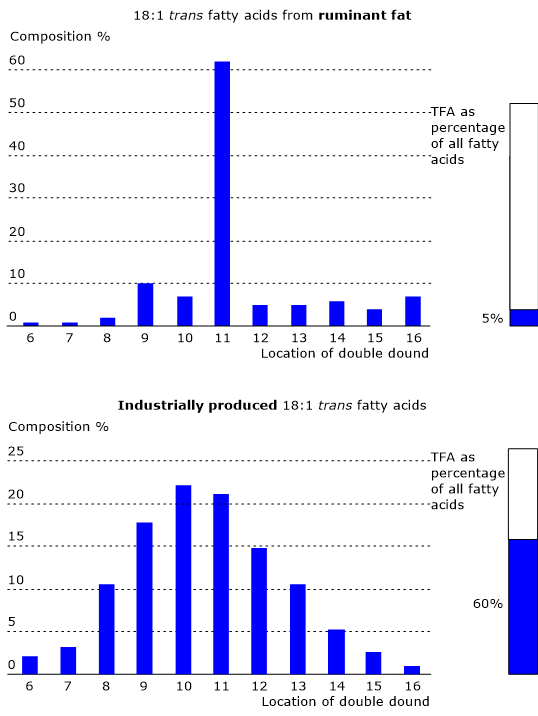
The most important cluster of trans fatty acids are trans-C18:1 isomers, that is, fatty acids containing 18 carbon atoms plus one double bond, whose position varies between Δ6 and Δ16 carbon atoms. In both sources, the most common isomers are those with double bonds between positions Δ9 and Δ11.[3][15]
However, even if these molecules are present both in industrial and ruminant TFAs, there is a considerable quantitative difference. For example, vaccenic acid (C18:1 Δ11t) represents over 60% of the trans-C18:1 isomers in ruminant trans fatty acids, whereas in industrial ones elaidic acid (C18:1Δ9t) comprises 15–20% and both C18:1 Δ10t and vaccenic acid account for over 20% each.[18]
Industrial trans fatty acids and human health
Consumption of industrial trans fats offers no apparent benefit or intrinsic value beyond their caloric contribution; from a human health standpoint, they are exclusively harmful, having adverse effects on:
- serum lipid levels;
- endothelial cells;
- systemic inflammation;
- other risk factors for cardiovascular disease.
Moreover, they are positively associated with the risk of coronary heart disease (CHD), and sudden death from cardiac causes and diabetes.[6][7][19]
Effects at plasmatic level
Low-density lipoprotein cholesterol (LDL-C) and high-density lipoprotein cholesterol (HDL-C) plasma levels are well-documented risk markers for the development of CHD.
- High LDL-C levels are associated with an increased incidence of ischemic heart disease.
- High HDL-C levels are associated with a reduced risk.
For this reason, the ratio between total cholesterol level and HDL-C is often used as a combined risk marker for these two components in relation to the development of heart disease: the higher the ratio, the higher the risk.[20]
TFAs have adverse effects on serum lipids.
These effects have been evaluated in numerous controlled dietary trials by isocaloric replacement of saturated fatty acids or cis-unsaturated fatty acids with trans fats. It was demonstrated that such replacement:
- raises LDL-C levels;
- lowers HDL-C levels, in contrast to saturated fatty acids that increase HDL-C levels when used as replacement in a similar study;
- increases the ratio of total cholesterol to HDL-C, approximately twice that for saturated fatty acids, and, on the basis of this effect alone, trans fatty acids have been estimated to cause about 6% of coronary events in the USA.[21]
Furthermore, trans fats:
- produce a deleterious increase in small, dense LDL-C subfractions, that is associated with a marked increase in the risk of CHD, even in the presence of relatively normal LDL-C;[22]
- increase the blood levels of triglycerides, and this is an independent risk factor for CHD;[23]
- increase levels of Lp(a)lipoprotein, another important coronary risk factor.[6]
Since 2004, prospective studies have shown that the relation between the intake of trans fatty acids and the incidence of CHD is greater than that predicted by changes in serum lipid levels alone. This suggests that trans fats influence other risk factors for CHD, such as inflammation and endothelial-cell dysfunction.[6][24]
Inflammation and endothelial-cell dysfunction
The role of inflammation in atherosclerosis, and consequently in CHD, has burgeoned in the last years.
Interleukin-6, C-reactive protein (CRP), and an increased activity of tumor necrosis factor (TNF) system are some markers of inflammation.[25]
In women greater intake of trans fatty acids is associated with increased activity of TNF system, and in those with a higher body mass index with increased levels of interleukin-6 and CRP. For example, the difference in CRP seen with an average intake of trans fats of 2.1% of the total daily energy intake, as compared with 0.9%, correspond to an increased risk of cardiovascular disease of 30%. Similar results have been reported in patients with established heart disease, in randomized, controlled trials, in in vitro studies, and in studies in which it has been analyzed membrane levels of trans fatty acids, a biomarker of their dietary intake.
So, trans fats promote inflammation, and their inflammatory effects may account at least in part for their effects on CHD that, as seen above, are greater than would be predicted by effects on serum lipoproteins alone.[5]
Note: the presence of inflammation is an independent risk factor not only for CHD but also for insulin resistance, diabetes, dyslipidemia, and heart failure.[26]
Another target of TFAs may be endothelial function.
Several studies have suggested the association between greater intake of trans fats and increased levels of circulating biomarkers of endothelial dysfunction, such as E-selectin, sICAM-1, and sVCAM-1.[27]
Other effects
In vitro studies have demonstrated that trans fats affect lipid metabolism through several pathways.
- They alter secretion, lipid composition, and size of apolipoprotein B-100 (apo B-100).[28]
- They increase cellular accumulation and secretion of free cholesterol and cholesterol esters by hepatocytes.[29]
- They alter expression in adipocytes of genes for peroxisome proliferator-activated receptor-gamma (PPAR-gamma), lipoprotein lipase, and resistin, proteins having a central role in the metabolism of fatty acids and glucose.[30]
Coronary heart disease
Industrial trans fats are an independent cardiovascular risk factor.[6]
Since the early 1990s, attention has focused on the effect of trans fatty acids on plasma lipid and lipoprotein concentrations.[4]
Furthermore, four major prospective studies covering about 140,000 subjects, monitored for 6–14 years, found positive epidemiological evidence relating dietary trans fats to CHD risk. These four studies are “The Health Professionals Follow-up Study”, “The Alpha-Tocopherol Beta-Carotene Cancer Prevention Study”, “The Nurses’ Health Study”, and “The Zutphen Elderly Study”.
They cover such diverse populations that the results likely hold true for the general population.[31][32][33]
A meta-analysis of these studies showed that a 2% increase in energy intake from industrial TFAs was associated with a 23% increase in CHD incidence. Relative risks were 1.36 in “The Health Professionals Follow-up Study”, 1.14 in “The Alpha-Tocopherol Beta-Carotene Cancer Prevention Study”, 1.93 (1.43–2.61) in “The Nurses’ Health Study”, and 1.28 (1.01–1.61) in “The Zutphen Elderly Study”.
Thus, risk increases substantially even at low intakes: 2% of total energy in a 2,000 kcal diet equals 40 kcal, or about 4–5 g of fat (roughly a teaspoonful).
Moreover, in three studies, the association between industrial trans fat intake and CHD risk was stronger than that for saturated fatty acids. In “The Zutphen Elderly Study”, this comparison was not evaluated.
Due to these severe adverse effects, study authors noted it would be unethical to conduct long-term randomized trials testing their direct impact on CHD incidence.[6][34]
Further evidence of adverse effects on CHD
A study conducted in an Australian population with a first heart attack and no preceding history of CHD or hyperlipidemia has shown a positive association between levels of trans fatty acids in adipose tissue and the risk of nonfatal myocardial infarction.
It was shown that adipose tissue C18:1Δ7t, found in both animal and vegetable fats, was an independent predictor of a first myocardial infarction, that is, its adipose tissue level is still a predictor for heart disease after adjustment for total cholesterol. Again, it appears that only a minor part of the negative effects of trans fats occurs via plasma lipoproteins.
During the course of this study, mid-1996, TFAs were eliminated from margarines sold in Australia. This was a unique opportunity to investigate the temporal relationship between trans fat intake and their adipose tissue levels. It was demonstrated that trans fats disappear from adipose tissue of both case-patients and controls with a rate about 15% of total trans fats/y.[35]
Another study conducted in Costa Rica has found a positive association between myocardial infarction and trans fatty acids.[36]
Interestingly, in a larger, community-based case-control study, levels of trans fats in red blood cell membranes were associated, after adjustment for other risk factors, with an increase in the risk of sudden cardiac death.[37][38] Moreover, the increased risk appeared to be related to trans-C18:2 levels, that were associated with a tripling of the risk, but not with cell membrane levels of trans-C18:1, the major trans fatty acids in foods.[38]
So, avoidance of industrial trans fats, or a consumption of less than 0.5% of total daily energy intake is necessary to avoid their adverse effects, far stronger on average than those of food contaminants or pesticide residues.[6]
Diabetes
In a prospective study covering 84,204 female nurses, from “The Nurses’ Health Study”, aged 34–59 y, analyzed from the 1980 to 1996, with no cancer, diabetes, or cardiovascular disease at base line, the intake of trans fatty acids was significantly related to the risk of developing type 2 diabetes. And, after adjustment for other risk factors trans fat intake was positively associated with the incidence of diabetes with a risk up to 39% greater.[39][40]
Data from controlled intervention studies showed that TFAs could impair insulin sensitivity in subjects with insulin resistance and type 2 diabetes (saturated fatty acids do the analogous response, with no significant difference between TFAs and them) more than unsaturated fatty acids, in particular the isomer of conjugated linoleic acid (CLA) trans-10, cis-12-CLA.
Be careful because some dietary supplements contain CLA isomers and may be diabetogenic and proatherogenic in insulin-resistant subjects.
No significant effect was seen in insulin sensitivity of lean, healthy subjects.[41]
Ruminant trans fatty acids and human health
Ruminant trans fatty acids, in amounts actually consumed in diets, are not harmful for human health.[7]
Four prospective studies have evaluated the relation between the intake of ruminant trans fatty acids and the risk of CHD: no significant association was identified.[42]
In a study published in 2008, data were analyzed from four Danish cohort studies. In Denmark, consumption of dairy products is relatively high and the range of ruminant trans fat intake is relatively broad, up to 1.1% of energy. Conversely, in other countries, their consumption for most people is substantially lower than 1% of energy, in the USA about 0.5% of energy.[18]
After adjustment for other risk factors, no significant associations between ruminant TFA consumption and incidence of CHD were found, confirming, in a population with relatively high intake of ruminant trans fatty acids, conclusions of four previous prospective studies.[42]
The absence of CHD risk with trans fats from ruminants as compared with industrial TFAs may be due to a lower intake. In the USA, the greater part of trans fats is of industrial origin; moreover, trans fat levels in milk and meats are relatively low, 1 to 8% of total fats.[43]
The absence of a higher risk of CHD may be due also to the presence of different isomers.[44] Ruminant and industrial sources share many common isomers, but there are some quantitative differences:
- vaccenic acid levels are higher in ruminant fats, accounting for 30–50% of trans isomers;
- trans-C18:2 isomers, present in deodorized and fried vegetable oils, as well as in some partially hydrogenated vegetable oils, are not present in appreciable amounts in ruminant fats.[18]
Finally, other still unknown, potentially protective factors could outweigh harmful effects of ruminant trans fats.[17]
| TFA isomer | Chemical nomenclature | Primary source | Typical proportion (% of total TFAs) | Cardiovascular disease risk association |
|---|---|---|---|---|
| Elaidic acid | trans-18:1 (Δ9t) | Industrial (partial hydrogenation) | 15% – 30% | Strong positive correlation (atherogenic) |
| Vaccenic acid | trans-18:1 (Δ11t) | Ruminant fat/Dairy (biohydrogenation) | 50%–80% | Neutral/Inverse correlation at dietary levels |
| Other 18:1 monotrans isomers | trans-18:1 (Δ6t to Δ10t, Δ12t) | Industrial (partial hydrogenation/deodorization) | 50%–70% (combined) | Positive correlation |
| Trans diene isomers | trans-18:2 (e.g., Δ9t,12t) | Industrial high-heat refining | 0.5%–5.0% | Strong positive correlation |
| Ruminant conjugated linoleic Acid | cis-9, trans-11 CLA (rumenic acid) | Ruminant Biohydrogenation | 10%–20% (of total CLA) | Neutral/Potentially beneficial at normal intake |
Regulatory measures on TFA content
As scientific evidence increasingly highlighted the risks associated with the consumption of trans fatty acids, different countries have addressed the issue at different times and in different ways. Below is an overview of developments in the European Union, the US, Australia and Canada. Naturally, as this is an evolving issue, the various countries may have further amended their legislation on the matter since this article was written.
| Jurisdiction/Organization | Regulatory authority | Policy measure / Legal Limit | Implementation Year | Scope and scope details |
|---|---|---|---|---|
| European Union | European Commission (regulation EU 2019/649) | Maximum 2 g of industrial trans fat per 100 g of total fat | 2021 | Applies to all food products provided to final consumers and retail |
| United States | Food and Drug Administration (FDA) | Removal of PHOs from GRAS status (Ban) | 2018–2020 | Prohibits partially hydrogenated oils in manufactured food supplies |
| Canada | Health Canada | Prohibition of PHOs in food notice (Ban) | 2018 | Bans the use, import, and sale of PHOs in all foods sold in Canada |
| Australia and New Zealand | Food Standards Australia New Zealand (FSANZ) | Voluntary industry reformulation and mandatory labeling | 2007 | Monitors levels; required on labels if claims are made on saturated/trans fat |
| Global guideline | World Health Organization (WHO REPLACE strategy) | Global elimination target (≤2% total fat or PHO bans) | 2018–2023 | Global call to eliminate industrially produced trans fats from food supply |
USA
In the USA, until 1985 no adverse effects of trans fatty acids on human health were demonstrated, and in 1975 a Procter & Gamble study showed no effect of trans fats on cholesterol.
Their use in fast food preparation grew from the 1980s, when the role of dietary saturated fats in increasing cardiac risk became clear. Then, a successful campaign was launched to get McDonald’s to switch from beef tallow to vegetable oil for frying its French fries. Meanwhile, studies began to raise concerns about their effects on health.
In 1985, the Food and Drug Administration (FDA) concluded that TFAs and oleic acid affected serum cholesterol level similarly, but from the second half of 1985 their harmful nature became clear, and the final proof came from both controlled feeding trials and prospective epidemiologic studies.
By 2003, the FDA ruled that food labels for conventional foods and supplements display trans fat content beginning January 1, 2006, marking the first substantive change to food labeling since per-serving requirements were introduced in 1990.
Subsequently, in 2005 the US Department of Agriculture made minimizing trans fat intake a key recommendation of the new food-pyramid guidelines, and in 2006 the American Heart Association recommended limiting intake to 1% of daily calories.
Locally, the New York City Board of Health announced a trans fat ban in its 40,000 restaurants by July 1, 2008, followed by the state of California in 2010–2011.
The decisive regulatory turning point came on June 16, 2015, when the FDA formally revoked the “Generally Recognized as Safe” (GRAS) status for partially hydrogenated oils, the primary source of industrial trans fats. Food manufacturers were given a compliance period until June 18, 2018 (extended to January 2019 for specific uses), which effectively resulted in a federal ban on industrial trans fats in the US food supply.[8][9]
Australia
After June 1996 they were eliminated from margarine sold in Australia, which before contributed about 50% of their dietary intake.[35]
Europe
On March 11, 2003 the Danish government, after a debate started in 1994 and two new reports in 2001 and 2003, decided to phase out the use of industrial trans fats in food before the end of 2003.
Two years later, however, the European Commission (CE) asked Denmark to withdraw this law, which was not accepted on the European Community level, unfortunately.
However, in 2007, EC decided to close its infringement procedure against Denmark because of increasing scientific evidence of the danger of this type of fatty acids.
The Danish example was followed by Austria and Switzerland in 2009, Iceland, Norway, and Hungary in 2011, and most recently, Estonia and Georgia in 2014.
To eliminate disparities across the single market and protect public health uniformly, the European Union adopted a binding community-wide standard. On April 24, 2019, the European Commission issued Regulation (EU) 2019/649, amending Annex II of Regulation (EC) No 1925/2006. This law established a mandatory upper limit of 2 grams of industrial trans fat per 100 grams of fat in foods destined for the final consumer across all EU member states, with full mandatory compliance enforced starting April 2, 2021. Consequently, the fragmented approach relying on voluntary food industry reformulation in Western Europe was replaced by an enforceable, continent-wide ban.[10]
Canada
Canada, in 2005, ruled that pre-packaged food labels showed their trans fat content.
Since the end of 2018, the use of partially hydrogenated oils has finally been banned, following their inclusion in Health Canada’s “List of Contaminants and Other Adulterating Substances”.
Therefore, following these federal and international bans in North America and the European Union, industrial trans fats have been largely purged from the commercial food supply. In regions where legal limits do not apply or when consuming restaurant and bakery items not bound by strict retail pre-packaging rules, consumers must still exercise caution by reading ingredient lists for terms like “partially hydrogenated vegetable oils,” as small residual amounts or exemptions can occasionally persist.
Note: food labels are not obligatory in restaurants, bakeries, and many other retail food outlets.[45]
Food reformulation
Public health organizations, including the World Health Organization in September 2006, have recommended reducing industrial trans fatty acid consumption. In the US alone, near-elimination of these fats could prevent 72,000 to 280,000 of the 1.2 million CHD events annually.[8]
Food manufacturers and restaurants can reduce industrial TFAs by replacing partially hydrogenated oils.[8] In Denmark, eliminating them from vegetable oils did not increase saturated fat consumption, as they were replaced mainly with cis-unsaturated fats without impacting cost, availability, or quality.[46]
In 2009, Stender et al. showed that industrial trans fats in foods like French fries, cookies, cakes, and microwave popcorn across the US, South Africa, and many European countries could be replaced at similar prices using a mixture of saturated, monounsaturated, and polyunsaturated fatty acids. This offers greater nutritional benefits than a direct substitution with saturated fats alone.[47]
However, caution is needed: while saturated fat levels stayed constant in low-trans French fries, they increased by an average of 33% in cookies and cakes, and 24% in microwave popcorn. Saturated fats are less harmful than industrial trans fats, but worse than mono- and polyunsaturated fats.[47]
Analyzing European supermarket and fast-food items (McDonald’s and KFC) from 2005 to 2014, the same research group found TFA content dropped or disappeared in several Western European countries while remaining high in Eastern and Southeastern Europe.[48][49]
In 2010, Mozaffarian et al. evaluated trans fat and saturated fat levels in major US brand-name foods across two periods (1993–2006 and 2008–2009). They observed an overall reduction in industrial trans fats without a substantial or equivalent rise in saturated fat content.[50]
Food sources
Although the use of fats containing trans fatty acids has been banned in North America, Australia and the European Union, the situation is different in the rest of the world, where many foods high in TFAs are widely consumed.
In the US, the greater part of these fatty acids came from partially hydrogenated vegetable oils, with an average consumption from this source that has been constant since the 1960s.[8]
It should be noted that the following trans fatty acid values must be interpreted with caution because, as previously said, many fast food establishments, restaurants and industries may have changed, or had to change the type of fat used for frying and cooking since these analyses were conducted.[49]
The reported values, unless otherwise specified, refer to percentage in trans fatty acids/100 g of fatty acids.
Margarine
Among foods with trans fats, stick or hard margarine had the highest percentage of them, but levels of these fatty acids have declined as improved technology allowed the production of softer margarines which have become popular. But there are differences in trans fatty acid content of margarine from different countries.[49][51]
- The highest content, 13–16.5%, is found in soft margarine from Iceland, Norway, and the UK.
- Less content is found in Italy, Germany, Finland, and Greece, 5.1%, 4.8%, 3.2%, and 2.9% respectively.
- In Portugal, The Netherlands, Belgium, Denmark, France, Spain, and Sweden margarine trans fat content is less than 2%.[52][53]
USA and Canada lag behind Europe, but in the USA, with the advent of trans fat labeling of foods and the greater knowledge of the risk associated with their consumption by the buyers, change is occurring. For this reason, currently, in the US, margarine is considered to be a minor contributor to the intake of TFA, whereas the major sources are commercially baked and fast food products like cake, cookies, wafers, snack crackers, chicken nuggets, French fries or microwave-oven popcorn.[50]
Vegetable shortenings
Trans fatty acid content of vegetable shortenings ranges from 6% to 50%, and varies in different countries: in Germany, Austria and New Zealand it is less than in France or the USA.
However, like margarines, their trans fat content is decreasing. In Germany it decreased from 12% in 1994 to 6% in 1999, in Denmark it was 7% (1996) while in New Zealand it was about 6% (1997).[15]
Vegetable oils
Currently, non-hydrogenated vegetable oils for salad and cooking contain no or only small amounts of trans fats.
Processing of these oils can produce minimal levels of them, ranged from 0.05 g/100 g of food for extra virgin olive oil to 2.42 g/100 g of food for canola oil. So, their contribution to trans fat content of the current food supply is very small.[13]
One exception is represented by Pakistani hydrogenated vegetable oils whose TFA content ranges from 14% to 34%.[54]
Prepared soups
Among foods with trans fats, prepared soups contain a significant amount of them, ranging from 10% of beef bouillon to 35% of onion cream. So, they contribute a great amount of such fatty acids to the diet if frequently consumed.[55]
Processed foods
Thanks to their properties, trans fatty acids are used in many processed foods such as cookies, cakes, croissants, pastries and other baked goods, which are the greatest source of these fats in the North American diet. Of course, their trans fat content depends on the type of fat used in processing.[55]
Sauces
Mayonnaise, salad dressings and other sauces contain only small or no-amounts of trans fats.[55]
Human milk and infant foods
The trans fat content of human milk reflects the maternal diet of the previous day, ranges between 1% and 7%, and has decreased from 7.1% in 1998 to 4.6% in 2005–2006.
Infant formulas have an average trans fat content of 0.1–4.5%, with one brand reaching up to 15.7%.
Baby foods contain greater than 5% of trans fats.[56]
Fast foods and restaurant foods
Vegetable shortenings high in trans fats are used as frying fats, so fast foods and many restaurant foods may contain relatively large amounts of them. Foods are fried pies, French fries, chicken nuggets, hamburgers, fried fish as well as fried chicken.
Articles published by Stender et al. from 2006 to 2009 demonstrated that TFA content in French fries and chicken nuggets varied dramatically by nation, fast-food chain, and even individual city outlets depending on the frying oil used. For instance, oil used in US and Peruvian outlets of a major chain contained 23–24% trans fats, whereas European outlets averaged around 10%, with Denmark dropping as low as 1–5%.
Consequently, a single meal of French fries and chicken nuggets purchased at McDonald‘s in New York City contained over 10 g of TFAs, while the same meal purchased at KFC in Hungary reached nearly 25 g.[46][51]
References
- a b c d e f g Akoh C.C., Min D.B. Food lipids: chemistry, nutrition, and biotechnology. 4th Edition. Boca Raton: CRC Press, 2017. doi:10.1201/9781315151854
- a b c d Chow C.K. Fatty acids in foods and their health implication. 3rd Edition. CRC Press, 2008. doi:10.1201/9781420006902
- a b c d e f Belitz H.-D., Grosch W., Schieberle P. Food chemistry. 4th Edition. Springer, 2009.
- a b Ascherio A., Rimm E.B., Giovannucci E.L., Spiegelman D., Stampfer M., Willett W.C. Dietary fat and risk of coronary heart disease in men: cohort follow up study in the United States. BMJ 1996; 313:84-90. doi:10.1136/bmj.313.7049.84
- a b Mozaffarian D., Pischon T., Hankinson S.E., Joshipura K., Willett W.C., and Rimm E.B. Dietary intake of trans fatty acids and systemic inflammation in women. Am J Clin Nutr 2004;79:606-612. doi:10.1093/ajcn/79.4.606
- a b c d e f g Mozaffarian D., Katan M.B., Ascherio A., Stampfer M.J., Willett W.C. Trans fatty acids and cardiovascular disease. N Engl J Med 2006;354(15):1601-13. doi:10.1056/NEJMra054035
- a b c Pipoyan D., Stepanyan S., Stepanyan S., Beglaryan M., Costantini L., Molinari R., Merendino N. The effect of trans fatty acids on human health: regulation and consumption patterns. Foods 2021;10(10):2452. doi:10.3390/foods10102452
- a b c d e Eckel R.H., Borra S., Lichtenstein A.H., Yin-Piazza D.Y. Understanding the complexity of trans fatty acid reduction in the american diet. American Heart Association trans fat conference 2006 report of the trans fat conference planning group. Circulation 2007;115:2231-2246. doi:10.1161/CIRCULATIONAHA.106.181947
- a b Food and Drug Administration, HHS. Final determination regarding partially hydrogenated oils. Notification; declaratory order; extension of compliance date. Fed Regist 2018;83(98):23358-9.
- a b European Commission. Commission Regulation (EU) 2019/649 of 24 April 2019 amending Annex III to Regulation (EC) No 1925/2006 as regards trans fat, other than trans fat naturally occurring in fat of animal origin. Official Journal of the European Union, L 110, 25.4.2019, pp. 17-20.
- a b Solomons T.W.G., Fryhle C.B., Snyder S.A. Solomons’ organic chemistry. 12th Edition. John Wiley & Sons Incorporated, 2017.
- a b Kemp P., White R.W., Lander D.J. The hydrogenation of unsaturated fatty acids by five bacterial isolates from the sheep rumen, including a new species. J Gen Microbiol 1975;90(1):100-14. doi:10.1099/00221287-90-1-100
- a b Bezelgues J.-B., Destaillats F. Formation of trans fatty acids during deodorization of edible oils. In: Destaillats F., Sébédio J.-L., Dionisi F., Chardigny J.-M., editors. Trans Fatty Acids in Human Nutrition. 2nd Edition. Woodhead Publishing; 2012. p. 65-75. doi:10.1533/9780857097873.65
- ^ Paul Sabatier – Biographical. NobelPrize.org. Nobel Prize Outreach 2026. Mon. 14 Sep 2026. https://www.nobelprize.org/prizes/chemistry/1912/sabatier/biographical/
- a b c Stender S., Dyerberg J. Influence of trans fatty acids on health. Ann Nutr Metab 2004;48(2):61-6. doi:10.1159/000075591
- ^ Normann W. Process for converting unsaturated fatty acids or their glycerides into saturated compounds. British Patent GB190301515A. Filed June 29, 1903, and issued January 21, 1904. Available from: https://patents.google.com/patent/GB190301515A/en
- a b Mozaffarian D. Commentary: Ruminant trans fatty acids and coronary heart disease-cause for concern? Int J Epidemiol 2008;37(1):182-184. doi:10.1093/ije/dym263
- a b c Stender S., Astrup A., Dyerberg J. Ruminant and industrially produced trans fatty acids: health aspects. Food Nutr Res 2008;52. doi:10.3402/fnr.v52i0.1651
- ^ Ascherio A., Katan M.B., Zock P.L., Stampfer M.J., Willett W.C. Trans fatty acids and coronary heart disease. N Engl J Med 1999;340:1994-1998. doi:10.1056/NEJM199906243402511
- ^ Hu F.B., Willett W.C. Optimal diet for prevention of coronary heart disease JAMA 2002;288:2569-2578. doi:10.1001/jama.288.20.2569
- ^ Mensink R.P., Katan M.B. Effect of dietary trans fatty acids on high-density and low-density lipoprotein cholesterol levels in healthy subjects. N Engl J Med 1990;323:439-445. doi:10.1056/NEJM199008163230703
- ^ Lichtenstein A.H., Ausman L., Jalbert S.M., Schaefer E.J. Effect of different forms of dietary hydrogenated fats on serum lipoprotein cholesterol levels. N Engl J Med 1999;340:1933-1940. doi:10.1056/NEJM199906243402501
- ^ Lichtenstein A.H. Dietary fat, carbohydrate, and protein: effects on plasma lipoprotein patterns J Lipid Res 2006;47:1661-1667. doi:10.1194/jlr.R600019-JLR200
- ^ Lopez-Garcia E., Schulze M.B., Meigs J.B., Manson J.E, Rifai N., Stampfer M.J., Willett W.C. and Hu F.B. Consumption of trans fatty acids is related to plasma biomarkers of inflammation and endothelial dysfunction. J Nutr 2005;135:562-566. doi:10.1093/jn/135.3.562
- ^ Tuomisto K., Jousilahti P., Sundvall J., Pajunen P., Salomaa V. C-reactive protein, interleukin-6 and tumor necrosis factor alpha as predictors of incident coronary and cardiovascular events and total mortality. A population-based, prospective study. Thromb Haemost 2006;95(3):511-8. doi:10.1160/TH05-08-0571
- ^ Hu F.B., Meigs J.B., Li T.Y., Rifai N., Manson J.E. Inflammatory markers and risk of developing type 2 diabetes in women. Diabetes 2004;53(3):693-700. doi:10.2337/diabetes.53.3.693
- ^ Bendsen N.T., Stender S., Szecsi P.B., Pedersen S.B., Basu S., Hellgren L.I., Newman J.W., Larsen T.M., Haugaard S.B., Astrup A. Effect of industrially produced trans fat on markers of systemic inflammation: evidence from a randomized trial in women. J Lipid Res 2011;52(10):1821-8. doi:10.1194/jlr.M014738
- ^ de Roos N.M., Bots M.L., Katan M.B. Replacement of dietary saturated fatty acids by trans fatty acids lowers serum HDL cholesterol and impairs endothelial function in healthy men and women. Arterioscler Thromb Vasc Biol 2001;21(7):1233-7. doi:10.1161/hq0701.092161
- ^ Oteng A.B., Kersten S. Mechanisms of action of trans fatty acids. Adv Nutr 2020;11(3):697-708. doi:10.1093/advances/nmz125
- ^ Saravanan N., Haseeb A., Ehtesham N.Z., Ghafoorunissa. Differential effects of dietary saturated and trans-fatty acids on expression of genes associated with insulin sensitivity in rat adipose tissue. Eur J Endocrinol 2005;153(1):159-65. doi:10.1530/eje.1.01946
- ^ Willett W.C., Stampfer M.J., Manson J.E., Colditz G.A., Speizer F.E., Rosner B.A., Sampson L.A., Hennekens C.H. Intake of trans fatty acids and risk of coronary heart disease among women. Lancet 1993;341(8845):581-5. doi:10.1016/0140-6736(93)90350-p
- ^ Pietinen P., Ascherio A., Korhonen P., Hartman A.M., Willett W.C., Albanes D., Virtamo J. Intake of fatty acids and risk of coronary heart disease in a cohort of Finnish men. The Alpha-Tocopherol, Beta-Carotene Cancer Prevention Study. Am J Epidemiol 1997;145(10):876-87. doi:10.1093/oxfordjournals.aje.a009047
- ^ Oomen C.M., Ocke M.C., Feskens E.J., van Erp-Baart M.A., Kok F.J., Kromhout D. Association between trans fatty acid intake and 10-year risk of coronary heart disease in the Zutphen Elderly Study: a prospective population-based study. Lancet 2001; 357(9258):746-751. doi:10.1016/S0140-6736(00)04166-0
- ^ Oh K., Hu F.B., Manson J.E., Stampfer M.J., Willett W.C. Dietary fat intake and risk of coronary heart disease in women: 20 years of follow-up of the Nurses’ Health Study. Am J Epidemiol 2005;161(7):672-679. doi:10.1093/aje/kwi085
- a b Clifton P.M., Keogh J.B., Noakes M. Trans fatty acids in adipose tissue and the food supply are associated with myocardial infarction. J Nutr 2004;134:874-879. doi:10.1093/jn/134.4.874
- ^ Baylin A., Kabagambe E.K., Ascherio A., Spiegelman D., Campos H. High 18:2 trans-fatty acids in adipose tissue are associated with increased risk of nonfatal acute myocardial infarction in Costa Rican adults. J Nutr 2003;133:1186-1191. doi:10.1093/jn/133.4.1186
- ^ Lemaitre R.N., King I.B., Raghunathan T.E., Pearce R.M., Weinmann S., Knopp R.H., Copass M.K., Cobb L.A., Siscovick D.S. Cell membrane trans-fatty acids and the risk of primary cardiac arrest. Circulation 2002;105:697-701. doi:10.1161/hc0602.103583
- a b Lemaitre R.N, King I.B, Mozaffarian D., Sootodehnia N., Siscovick D.S. Trans-fatty acids and sudden cardiac death. Atheroscler Suppl 2006; 7(2):13-5. doi:10.1016/j.atherosclerosissup.2006.04.003
- ^ Salmerón J., Hu F.B., Manson J.E., Stampfer M.J., Colditz G.A., Rimm E.B., and Willett W.C. Dietary fat intake and risk of type 2 diabetes in women. Am J Clin Nutr 2001;73:1019-1026 doi:10.1093/ajcn/73.6.1019
- ^ Hu F.B., Manson J.E., Stampfer M.J., Colditz G., Liu S., Solomon C.G., and Willett W.C. Diet, lifestyle, and the risk of type 2 diabetes mellitus in women. N Engl J Med 2001;345:790-797. doi:10.1056/NEJMoa010492
- ^ Risérus U. Trans fatty acids, insulin sensitivity and type 2 diabetes. Scand J Food Nutr 2006;50(4):161-165. doi:10.1080/17482970601133114
- a bJakobsen M.U., Overvad K., Dyerberg J., Heitmann B.L. Intake of ruminant trans fatty acids and risk of coronary heart disease. Int J Epidemiol 2008;37(1):173-82. doi:10.1093/ije/dym243
- ^ Willett W.C., Ascherio A. Trans fatty acids: are the effects only marginal? Am J Public Health 1994;84(5):722-4. doi:10.2105/ajph.84.5.722
- ^ Willett W., Mozaffarian D. Ruminant or industrial sources of trans fatty acids: public health issue or food label skirmish? Am J Clin Nutr 2008;87(3): 515-516. doi:10.1093/ajcn/87.3.515
- ^ Health Canada. Notice of modification to the list of contaminants and other adulterating substances — Prohibition of partially hydrogenated oils (PHOs). Government of Canada.
- a b Stender S., Dyerberg J., Astrup A. Consumer protection through a legislative ban on industrially produced trans fatty acids in Denmark. Scand J Food Nutr 2006;50(4):155-160. doi:10.1080/17482970601069458
- a b Stender S., Astrup A., Dyerberg J. What went in when trans went out? N Engl J Med 2009;361:314-316. doi:10.1056/NEJMc0903380
- ^ Stender S., Astrup A., and Dyerberg J. Artificial trans fat in popular foods in 2012 and in 2014: a market basket investigation in six European countries. BMJ Open 2016;6(3):e010673. doi:10.1136/bmjopen-2015-010673
- a b c Stender S., Astrup A.,and Dyerberg J. Tracing artificial trans fat in popular foods in Europe: a market basket investigation. BMJ Open 2014;4(5):e005218. doi:10.1136/bmjopen-2014-005218
- a b Mozaffarian D., Jacobson M.F., Greenstein J.S. Food reformulations to reduce trans fatty acids. N Eng J Med 2010;362:2037-2039. doi:10.1056/NEJMc1001841
- a b Stender S., Dyerberg J., Astrup A. High levels of trans fat in popular fast foods. N Engl J Med 2006;354:1650-1652. doi:10.1056/NEJMc052959
- ^ Stender S., Astrup A., and Dyerberg J. A trans European Union difference in the decline in trans fatty acids in popular foods: a market basket investigation. BMJ Open 2012;2(5):e000859. doi:10.1136/bmjopen-2012-000859
- ^ Costa N., Cruz R., Graça P., Breda J., and Casal S. Trans fatty acids in the Portuguese food market. Food Control 2016;64:128-134. doi:10.1016/j.foodcont.2015.12.010
- ^ Rashid A., Amjad S., Nishtar M.K., Nishtar N.A. Trans-fatty acid (TFA) elimination in Pakistan: a situational analysis. J Pak Med Assoc 2020;70(Suppl 2)(5):S1-S30.
- a b c Hulshof K.F., van Erp-Baart M.A., Anttolainen M., Becker W., Church S.M., Couet C., Hermann-Kunz E., Kesteloot H., Leth T., Martins I., Moreiras O., Moschandreas J., Pizzoferrato L., Rimestad A.H., Thorgeirsdottir H., van Amelsvoort J.M., Aro A., Kafatos A.G., Lanzmann-Petithory D., van Poppel G. Intake of fatty acids in western Europe with emphasis on trans fatty acids: the TRANSFAIR Study. Eur J Clin Nutr 1999;53(2):143-57. doi:10.1038/sj.ejcn.1600692
- ^Jasińska-Melon E, Mojska H, Bzikowska-Jura A. Trans fatty acids content in breast milk as a marker of their short-term intake within the breastfeeding mother’s diet: a single-participant pilot study. Nutrients 2026;18(13):2177. doi:10.3390/nu18132177