Sucrose, or saccharose, is a non-reducing disaccharide composed of one α-D-glucose molecule and one β-D-fructose molecule joined by an α-(1→2) glycosidic bond.[1][2]
It is produced by algae, cyanobacteria and plants, and is the end product of photosynthesis.[3][4]
It can be used by plants as an energy source as well as a precursor for the synthesis of several compounds including amino acids, and therefore proteins, cellulose, starch, and nucleotides. Furthermore, it is involved in the regulation of gene expression.[5]
It occurs in practically all plants, but its extraction is economically advantageous only from sugar beets (Beta vulgaris ssp. vulgaris var. altissima) and sugarcane (Saccharum officinarum).[6][7]
With starch and lactose, it is one of the three most common dietary carbohydrates.[8]
In the small intestine, sucrose is hydrolyzed into glucose and fructose in a reaction catalyzed by sucrase-isomaltase (EC 3.2.1.48).[9]
It is used as a natural sweetener for both domestic and industrial use, and, at high concentrations as a preservative.[10]
Insufficient sucrase-isomaltase activity causes the intact sucrose molecule to reach the colon, causing discomfort and osmotic-fermentative diarrhea following its metabolization by the gut microbiota.[11]
Summary: Key Points
- Chemical properties: a non-reducing disaccharide composed of α-D-glucose and β-D-fructose linked by an α-(1→2) glycosidic bond.
- Biological function in plants: synthesized as the primary end product of photosynthesis and used as the main carbon transport form through the phloem.
- Food sources: extracted globally for industrial and dietary use primarily from sugarcane and sugar beets.
- Intestinal digestion: hydrolyzed at the enterocyte brush border into glucose and fructose by the enzyme sucrase-isomaltase.
- Clinical relevance: deficiency in sucrase-isomaltase leads to unabsorbed sucrose reaching the colon, causing osmotic-fermentative diarrhea and gastrointestinal discomfort.
Contents
- Historical background
- Chemical properties
- Biosynthesis
- Role in plants
- Food sources
- Sucrose digestion
- Functions
- Sucrase-isomaltase deficiency
- References
Historical background
Sucrose seems to have been discovered in India in the 6th century BC, by boiling juice extracted from sugarcane. The army of Alexander the Great was the first among Westerners to come into contact with it. However, it remained a rare commodity for over a millennium, and it was only after the Crusades that it gained popularity as a sweetener, though restricted to the wealthy.[12]
In 1747, Marggraf A.S., a German chemist, discovered sucrose in sugar beet, and in 1802, Achard F., a student of his, developed an industrial process for its extraction. This same process was later adapted, with minor changes, to sugarcane.[13]
The word saccharose was coined in 1860 by Berthelot M., a French chemist, the same who isolated trehalose from Trehala manna, whereas the word sucrose was coined by the English chemist Miller W. three years earlier, in 1857.[14]
Chemical properties
As with lactose, maltose and trehalose, three other disaccharides, its molecular formula is C12H22O11 and its molecular weight is 342.30 g/mol.
According to IUPAC nomenclature, its systematic name is α-D-glucopyranosyl-(1→2)-β-D-fructofuranoside.[1]
Sucrose is composed of the monosaccharides α-D-glucose, in pyranose form, and β-D-fructose, in furanose form. The monosaccharides are joined by an α-(1→2) glycosidic bond, an acetal oxygen bridge from the hemiacetal of glucose to the hemiketal of the fructose. This glycosidic bond occurs with retention of the C1 configuration, hence the α configuration.[2]
It is a non-reducing sugar because the α-(1→2) glycosidic bond occurs between the aldehyde group of glucose and the ketone group of fructose, that is, between their anomeric carbons. This means that, in solution, it cannot exist in an open chain form; hence, there are no free carbonyl groups. Trehalose is also a non-reducing sugar.[2]
It appears as a white odorless, crystalline solid.[1]
| Category | Parameter | Specification | Details | Reference/Value |
|---|---|---|---|---|
| Identifiers | CAS Number | Registry | CAS Database Reference | 57-50-1 |
| PubChem CID | Compound ID | National Center for Biotechnology Information | 5988 | |
| Chemical features | Molecular formula | Composition | Elemental formula | C12H22O11 |
| Molecular weight | Mass | Molar mass | 342.30 g/mol | |
| Structural features | Nomenclature | IUPAC name | Systematic chemical name | α-D-glucopyranosyl-(1→2)-β-D-fructofuranoside |
| Glycosidic linkage | Linkage type | Anomeric acetal-hemiketal bridge | α-(1→2) glycosidic bond | |
| Chemical class | Category | Reactivity classification | Non-reducing disaccharide | |
| Physical features | Appearance | State and Organoleptic | Physical state | White, odorless, crystalline solid |
Biosynthesis
Sucrose is the end product of photosynthesis, the main metabolic pathway for fixing carbon on Earth. Using light energy, water and inorganic carbon in the form of carbon dioxide (CO2), photosynthesis leads to the transformation of light energy into chemical energy and fixation of carbon, namely, leads to the biosynthesis of energy-rich organic compounds. In addition, photosynthesis releases molecular oxygen to the environment.[4]
In plants, CO2 is fixed in the chloroplast stroma through the Calvin cycle or the dark reactions of photosynthesis to yield triose phosphates. Triose phosphates can remain in the chloroplast and be converted into starch, which will then be used during the following night, or be transported to the cytosol by a specific transporter, via an antiport with phosphate ions.[3]
From triose phosphates to sucrose
In the cytosol, fructose 1,6-bisphosphate aldolase or simply aldolase (EC 4.1.2.13) catalyzes the aldol condensation between two molecules of triose phosphate, dihydroxyacetone phosphate and glyceraldehyde 3-phosphate, to form fructose 1,6-bisphosphate.
Fructose 1,6-bisphosphate can be metabolized to yield other hexose phosphates such as fructose 6-phosphate (F6P), which, in turn, can be isomerized to glucose 6-phosphate (G6P), in a reversible isomerization reaction catalyzed by phosphoglucose isomerase (EC 5.3.1.9).
Aldolase and phosphoglucose isomerase are enzymes also involved in glycolysis, in the reverse reactions, and gluconeogenesis.
G6P is isomerized to glucose 1-phosphate, in a reversible reaction catalyzed by phosphoglucomutase (EC 5.4.2.2), an enzyme also involved in glycogen synthesis and glycogenolysis.
Glucose 1-phosphate can be activated by binding UTP to the anomeric carbon to form UDP-glucose, in a reaction catalyzed by UDP-glucose pyrophosphorylase (EC 2.7.7.9).
UDP-glucose is a nucleotide sugar that plays a central role in carbohydrate metabolism; for example it is involved in glycogen synthesis, galactose metabolism, after conversion into UDP-galactose, and, in photosynthetic organisms, in sucrose biosynthesis.[15]
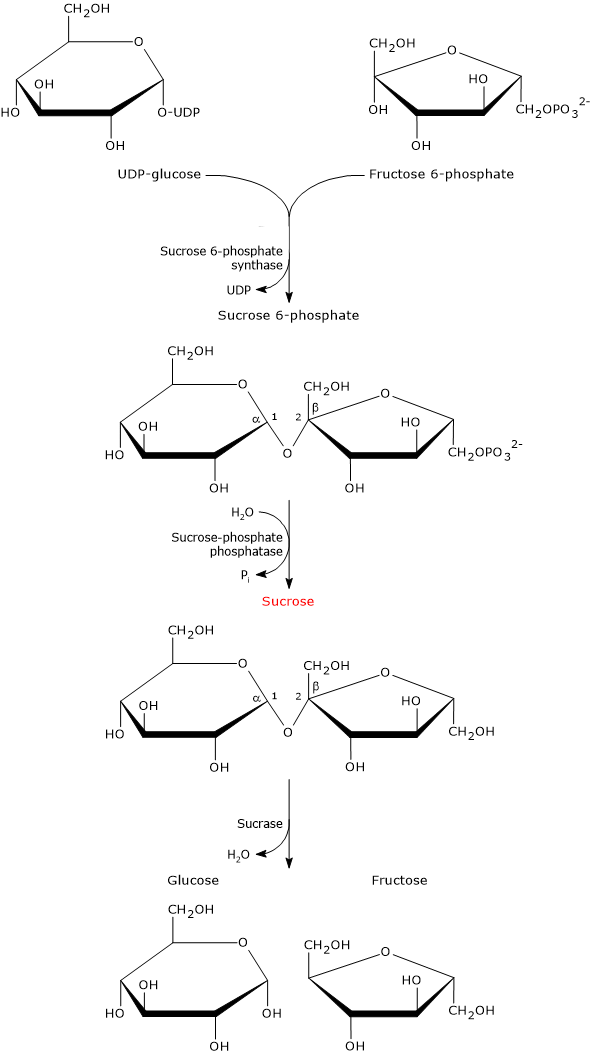
UDP-glucose and fructose 6-phosphate are the building blocks for the biosynthesis of sucrose, which occurs in two steps.
In the first step, sucrose 6-phosphate synthase (EC 2.4.1.14) catalyzes a reversible reaction in which the sugar moiety of UDP-glucose is transferred to fructose 6-phosphate to form sucrose 6-phosphate.[3]
Sucrose 6-phosphate is dephosphorylated to sucrose in an irreversible hydrolysis catalyzed by sucrose-phosphate phosphatase (EC 3.1.3.24). This hydrolysis shifts the equilibrium of the reaction catalyzed by sucrose 6-phosphate synthase towards sucrose biosynthesis.[16]
Regulation
The biosynthesis of sucrose is highly regulated and coordinated with the biosynthesis of starch, which occurs in chloroplasts.
Sucrose 6-phosphate synthase, which is also involved in starch metabolism, is the key regulatory enzyme and is regulated via allosteric effectors and covalent modifications, namely reversible phosphorylations. Furthermore, as with the regulation of glycolysis and gluconeogenesis, fructose 2,6-bisphosphate plays a key role.[3]
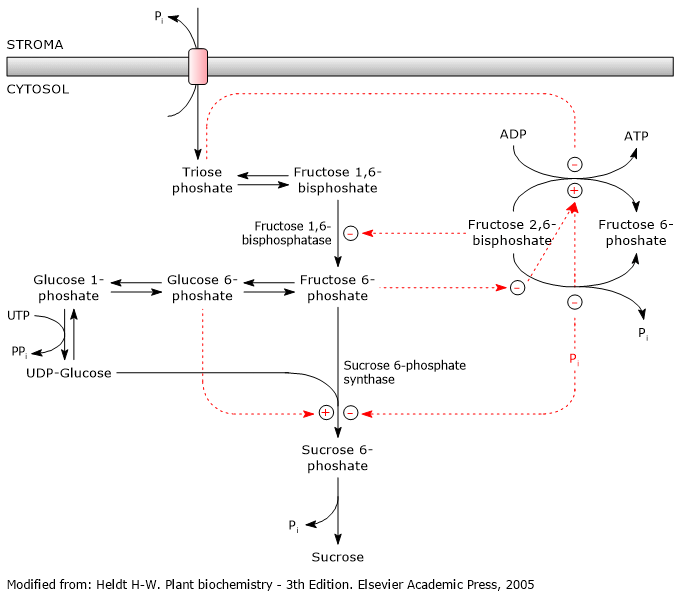
It also appears that trehalose 6-phosphate is involved, acting as a negative feedback regulator that signals and regulates sucrose levels.[17][18]
Role in plants
Sucrose is the major product of photosynthetic tissues and is the main sugar transported through the phloem to the non-photosynthetic tissues of the plant.
In non-photosynthetic tissues, it can enter different metabolic pathways such as those leading to the production of starch, cellulose, amino acids, polyphenols, nucleotides, fatty acids, lipids, carotenoids, and many other compounds, or can be used for energy production.[4][19]
It is also involved in plant responses to abiotic stress and in transcriptional and post-transcriptional control of gene expression.[5]
In Tracheophyta, also called vascular plants, it performs many of the functions that trehalose carries out in bacteria, fungi and insects, and its concentration is 100 to 1,000 times higher than that of trehalose. The reasons for this dominance are uncertain. It has been suggested that the lower viscosity of concentrated sucrose solutions may have made it more suitable than trehalose for phloem transport.[20]
Food sources
Sucrose, being the end product of photosynthesis, is widely spread in fruit and vegetables, together with fructose and glucose. However, these three carbohydrates are present in different amounts. For example, glucose and fructose are the major sugars in tomatoes, grapes, blueberries, blackberries, cherries, figs, avocados, and lemons, whereas sucrose is practically absent; conversely, sucrose is the major sugar in bananas, peaches, oranges, mangoes, sweet corn, sweet peas, and carrots.
Among natural sweeteners, it is the major sugar in maple syrup and molasses, where it accounts for over 98% and about 53% of total sugars, respectively, whereas it constitutes about 14% and just over 1% of total sugars of agave syrup and honey.[21]
Extraction from sugarcane
Sugarcane accounts for about 75% of global sucrose production, and the disaccharide makes up about 10–15% of the weight of plants ready to be harvested.[21]
Once cut, the plant must be rapidly processed, as it deteriorates very quickly.
In the first step of processing, sugarcane is ground and crushed for juice extraction. The fibrous plant residue, called bagasse, once dried, can be used as a fuel.
The next step is the filtration step. To prevent sucrose from being cleaved into fructose and glucose by organic acids, which would lead to the formation of invert sugar, calcium hydroxide is added.
The neutralized juice is heated up to 95° C (203° F) and clarified by calcium hydroxide, that causes a precipitation, even if incomplete, of impurities such as glucose, fructose, fiber, pectins, inorganic ashes, amino acids, proteins and other compounds, forming a mud which is separated by gravity or centrifugation. By heating, partial evaporation of water occurs, concentrating the juice to about 35%. Calcium ions, derived from calcium hydroxide, are removed by bubbling CO2 through the juice. The reaction between CO2 and calcium ions produces a calcium carbonate precipitate.
The following step is the crystallization by which, through a series of centrifugation and evaporation steps, sucrose is separated from the molasses: the product is raw cane sugar ready for sale.
Molasses is one of the additives that can be added to animal feed; moreover, it can be used to produce ethanol, citric acid, yeast tablets, and rum.[7]
Refined sugar
Refined sugar is produced from raw cane sugar through separation of residual molasses, which has negligible nutritional value.
After the sugar has been dissolved in hot water, calcium hydroxide is added to precipitate residual molasses and then achieve further clarification.
At this point, the solution, which contains yellowish residues, is passed through activated carbon that adsorbs the residues.
Refined sugar is eventually obtained through a series of crystallizations and centrifugations.[21]
Extraction from sugar beet
The sucrose content of sugar beets ready for harvest, thanks to selection efforts in the last two centuries, has increased from 4.5% to 16–18% of the weight of the plants. Its cultivation is particularly important in Europe.[21]
Except for the initial steps, sucrose extraction from sugar beets is similar to the extraction from sugar cane.
After being harvested and washed, sugar beets are cut into slices and put in water at a temperature of 60° to 70° C (140°–158° F). This leads to the rupture of cell membranes and the release of sucrose. The solution, called raw juice, contains, in addition to sucrose in a concentration between 10% and 15%, many impurities, both inorganic, such as salts, and organic, such as glutamic acid, proteins, including oxidative enzymes, polyphenols, acids, saponins, betaines, pectins, which give it a color ranging from brownish to black, which must be removed.
Heat-resistant microorganisms are eliminated by adding a disinfectant, for example sulfur dioxide, which will be re-added in a subsequent step to prevent browning and degradation reactions.
As with sugarcane processing:
- calcium hydroxide is used for precipitating impurities;
- CO2 is bubbled through the juice to precipitate calcium carbonate that carries with it some of the impurities;
- evaporation and crystallization steps yield sugar with a purity higher than 99.7%.[6]
| Source | Process step | Key parameter/Reagent | Specification |
|---|---|---|---|
| Sugarcane | Plant yield | 10–15% sucrose weight | Sucrose content of harvested sugarcane plants (accounts for ≈ 75% of global production) |
| Juice clarification | Calcium hydroxide and 95° C | Neutralizes organic acids, prevents invert sugar formation, and precipitates impurities | |
| Decarbonation | Carbon dioxide | Bubbled to remove excess calcium ions as calcium carbonate precipitate | |
| Sugar Beet | Plant yield | 16–18% sucrose weight | Sucrose content achieved through plant breeding; primary source in Europe |
| Cell membrane rupture | Water at 60°–70° C | Slices are heated to break cell membranes and release sucrose into raw juice | |
| Refining and purity | Evaporation and crystallization | Yields high-grade refined sucrose with a final purity exceeding 99.7% |
Sucrose digestion
In mammals, carbohydrate digestion takes place mainly in the duodenum, the portion of the intestine downstream of the stomach.[8]
Hydrolases of the brush border of enterocytes and pancreatic alpha-amylase hydrolyze polysaccharides, oligosaccharides, and disaccharides into their constituent monosaccharides, namely, glucose, galactose and fructose. This is followed by absorption of monosaccharides.[15]
The α-(1→2) glycosidic bond of sucrose is hydrolyzed in a reaction catalyzed by sucrase-isomaltase, an enzyme with two active sites, coded by a single gene.
One active site, the sucrase, hydrolyzes the glycosidic bond of:
- sucrose, to yield glucose and fructose;
- some branched starches and short α-(1→4) linked glucose oligomers, with up to six glucose units, to yield glucose units;
- maltose, to yield individual glucose molecules.
Note that this active site is responsible for about 80% of small bowel maltase activity.
The other active site, the isomaltase, catalyzes the release of straight chains from α-limit dextrins, glucose polymers with at least one α-(1→6) glycosidic bond, in an α-(1→6) glycosidase reaction.[9]
Due to this activity, the enzyme is also called α-dextrinase.
| Subunit/Site | Substrate/Targeted Bond | Primary Reaction/Products | Physiological Role and Specification |
|---|---|---|---|
| Sucrase active site | Sucrose [α-(1→2) bond] | Yields 1 glucose + 1 fructose | Primary site for dietary sucrose hydrolysis in the small intestine |
| Branched starches and α-(1→4) oligomers | Yields individual glucose units | Cleaves short α-(1→4) linked chains containing up to six glucose units | |
| Maltose [α-(1→4) bond] | Yields individual glucose molecules | Responsible for ≈ 80% of total small bowel maltase activity | |
| Isomaltase active site | α-Limit dextrins [α-(1→6) bond] | Yields straight-chain glucose polymers | Acts as an α-(1→6) glycosidase, removing branch points from limit dextrins |
Functions
Despite competition from artificial sweeteners, sucrose is still the most widely used sweetener for both domestic and industrial use. Moreover, thanks to its antimicrobial action, which is exerted at high concentrations, it is one of the most widely used preservatives, for example, in jams and marmalades.[10]
Sucrase-isomaltase deficiency
Primary or congenital sucrase-isomaltase deficiency is a genetic disorder first reported in 1960.[22]
It is caused by more than twenty-five mutations within the sucrase gene, of which seven phenotypes are known. Either sucrase or isomaltase subunits can be affected.[11]
Since there are no membrane transporters for disaccharides, unabsorbed sucrose causes osmotic diarrhea and, once it enters the colon, is partly metabolized by the gut microbiota, which is part of the broader human microbiota. This leads to the excessive production of gases, such as methane, carbon dioxide, and hydrogen, as well as short-chain fatty acids, mainly acetic acid, propionic acid, and butyric acid, causing severe discomfort and osmotic-fermentative diarrhea.[23]
The main treatment is to reduce or avoid dietary sucrose.[24]
Note: osmotic diarrhea results from the accumulation of non-absorbable, osmotically active solutes in the lumen of the distal portion of the small intestine and colon. This occurs, for instance, due to the deficiency of one or more disaccharidases in the enterocyte brush border, such as lactase in hypolactasia or sucrase-isomaltase in primary sucrase-isomaltase deficiency. These deficiencies lead to disaccharide accumulation and a consequent increase in osmotic pressure. In turn, this draws fluid into the intestinal lumen, leading to an excessive loss of electrolytes and water in the stool.[22]
References
- ^ a b c National Center for Biotechnology Information. PubChem Compound Summary for CID 5988, Sucrose. https://pubchem.ncbi.nlm.nih.gov/compound/Sucrose. Accessed Aug. 6, 2026.
- ^ a b c Soderberg T. Organic chemistry with a biological emphasis. Volume I. Chemistry Publications. 2019.
- ^ a b c Heldt H-W. Plant biochemistry – 3rd Edition. Elsevier Academic Press, 2005.
- ^ a b Stein O., Granot D. An overview of sucrose synthases in plants. Front Plant Sci 2019;10:95. doi:10.3389/fpls.2019.00095
- ^ a b Ruan Y.L. Sucrose metabolism: gateway to diverse carbon use and sugar signaling. Annu Rev Plant Biol 2014;65:33-67. doi:10.1146/annurev-arplant-050213-040251
- ^ a b United States Environmental Protection Agency (EPA). Sugar beet processing.
https://www.epa.gov/sites/default/files/2020-10/documents/b9s10-1b.pdf - ^ a b United States Environmental Protection Agency (EPA). Sugarcane processing. https://www.epa.gov/sites/default/files/2020-10/documents/c9s10-1a.pdf
- a b Guyton A.C., Hall J.E. Textbook of medical physiology. 14th Edition. Philadelphia: Elsevier, 2021.
- a b Gericke B., Schecker N., Amiri M., Naim H.Y. Structure-function analysis of human sucrase-isomaltase identifies key residues required for catalytic activity. J Biol Chem 2017;292(26):11070-11078. doi:10.1074/jbc.M117.791939
- ^ a b Damodaran S., Parkin K.L. Fennema’s food chemistry. 5th Edition. CRC Press. 2017.
- ^ a b Cohen S.A. The clinical consequences of sucrase-isomaltase deficiency. Mol Cell Pediatr 2016;3(1):5. doi:10.1186/s40348-015-0028-0
- ^ Orna M.V., Eggleston G., Bopp A.F. Chemistry’s role in food production and sustainability: past and present. Volume 1314 of ACS symposium series. American Chemical Society, 2019.
- ^ Britannica Editors. Andreas Sigismund Marggraf. Encyclopedia Britannica, August 3, 2026. https://www.britannica.com/biography/Andreas-Sigismund-Marggraf
- ^ Stick R.V., Williams S.J. Carbohydrates: the essential molecules of life. 2nd Edition. Elsevier: Amsterdam, 2009.
- ^ a b Nelson D.L., Cox M.M. Lehninger. Principles of biochemistry. 8th Edition. W.H. Freeman and Company, 2021.
- ^ Albi T., Ruiz M.T., de los Reyes P., Valverde F., Romero J.M. Characterization of the sucrose phosphate phosphatase (SPP) isoforms from Arabidopsis thaliana and role of the S6PPc domain in dimerization. PLoS ONE 2016;11(11):e0166308. doi:10.1371/journal.pone.0166308
- ^ Figueroa C.M., Lunn J.E. A tale of two sugars: trehalose 6-phosphate and sucrose. Plant Physiol 2016;172(1):7-27. doi:10.1104/pp.16.00417
- ^ SharathKumar M., Zacharaki V., Muniz Nardeli S., Seibert T., Wahl V. Trehalose 6-phosphate: a master regulator of plant development. Trends Plant Sci 2026;S1360-1385(26)00137-8. doi:10.1016/j.tplants.2026.05.001
- ^ Nešović M., Gašić U., Tosti T., Horvacki N., Nedić N., Sredojević M., Blagojević S., Ignjatović L., Tešić Ž. Distribution of polyphenolic and sugar compounds in different buckwheat plant parts. RSC Adv 2021;11(42):25816-25829. doi:10.1039/d1ra04250e
- ^ Lunn J.E., Delorge I., Figueroa C.M., Van Dijck P., Stitt M. Trehalose metabolism in plants. Plant J 2014;79(4):544-67. doi:10.1111/tpj.12509
- ^ a b c d Belitz H.-D., Grosch W., Schieberle P. Food Chemistry. 4th Edition. Springer, 2009.
- ^ a b Weijers H.A., van de Kamer J.H., Mossel D.A., Dicke W.K. Diarrhoea caused by deficiency of sugar-splitting enzymes. Lancet 1960;2(7145):296-7. doi:10.1016/s0140-6736(60)91381-7
- ^ Holtug K., Clausen M.R., Hove H., Christiansen J., Mortensen P.B. The colon in carbohydrate malabsorption: short-chain fatty acids, pH, and osmotic diarrhoea. Scand J Gastroenterol 1992;27(7):545-52. doi:10.3109/00365529209000118
- ^ Grand R.J., Montgomery R.K., Chitkara D.K., Büller H.A. Carbohydrate and lactose malabsorption. Editor: Leonard R. Johnson. Encyclopedia of Gastroenterology. Elsevier, 2004, pp. 268-274. doi:10.1016/B0-12-386860-2/00103-9
Domande Frequenti
Why is sucrose classified as a non-reducing sugar?
It is non-reducing because the α-(1→2) glycosidic bond directly involves the anomeric carbons of both monomers (C1 of glucose and C2 of fructose). This leaves no free aldehyde or ketone groups capable of undergoing oxidation or mutarotation.
How is sucrose biosynthesis regulated in plant cells?
It occurs in the cytosol via sucrose 6-phosphate synthase. The enzyme is allosterically activated by glucose 6-phosphate, inhibited by inorganic phosphate, and covalently regulated via reversible phosphorylation driven by light and carbon levels.
How is dietary sucrose digested in the human small bowel?
It is hydrolyzed at the enterocyte brush border by sucrase-isomaltase into glucose and fructose. Enzyme deficiency leaves sucrose unabsorbed, pulling water into the lumen and undergoing colonic bacterial fermentation, causing osmotic diarrhea.