Ketogenic amino acids are amino acids whose carbon skeleton can be fully or partially catabolized into acetoacetyl-CoA or acetyl-CoA, molecules that serve as precursors for the synthesis of ketone bodies, hence the name, or of fatty acids.[1]
Amino acids are the fundamental constituents of proteins.
Since the body lacks specific amino acid reserves comparable to glycogen or triglycerides, excess amino acids are converted into citric acid cycle intermediates to produce energy once protein synthesis demands are met.[2]
When cellular energy requirements are satisfied, the carbon residues from amino acid catabolism are redirected towards the synthesis of glucose, fatty acids, or ketone bodies.[3]
Proteinogenic amino acids are classified as ketogenic amino acids or glucogenic based on the metabolic fate of their carbon skeleton.[4] Ketogenic amino acids yield acetoacetyl-CoA and/or acetyl-CoA, while glucogenic ones are catabolized into five precursor metabolites: pyruvate, oxaloacetate, α-ketoglutarate, succinyl-CoA and fumarate.[5]
However, this classification is not unique, as five amino acids are both ketogenic and glucogenic, originating at least one glucogenic and one ketogenic precursor.[6]
Summary: Key Points
- Metabolic fate: ketogenic amino acids are catabolized into acetyl-CoA or acetoacetyl-CoA, serving as direct precursors for ketone bodies and fatty acids synthesis.
- Exclusively ketogenic: leucine and lysine are the only two strictly ketogenic amino acids, meaning they cannot contribute to net glucose production in animals.
- Biochemical barrier: acetyl-CoA cannot generate glucose due to the loss of two carbon atoms in the citric acid cycle and the irreversibility of the pyruvate dehydrogenase complex reaction.
- Fasting dynamics: during prolonged fasting, their role in ketogenesis is minor compared to fatty acid beta-oxidation; the body prioritizes glucogenic amino acids to maintain glucose homeostasis.
Contents
- What are ketogenic amino acids?
- Biochemical basis
- Ketogenic amino acids during prolonged fasting
- Glyoxylate cycle
- References
What are ketogenic amino acids?
Only two of the twenty amino acids that make up proteins are exclusively ketogenic: leucine and lysine. The catabolism of their carbon skeleton results in the production of acetoacetyl-CoA and acetyl-CoA.[6]
| Amino acid | Ketogenic | Glucogenic | |
|---|---|---|---|
| Acetyl-CoA | Acetoacetyl-CoA | ||
| Phenylalanine | ✔ | Fumarate | |
| Isoleucine | ✔ | Succinyl-CoA | |
| Leucine * | ✔ | ✔ | |
| Lysine * | ✔ | ||
| Tyrosine | ✔ | Fumarate | |
| Threonine | ✔ | Succinyl-CoA | |
| Tryptophan | ✔ | ✔ | Pyruvate |
| * Exclusively ketogenic amino acids | |||
Another five amino acids, namely isoleucine, phenylalanine, threonine, tryptophan, and tyrosine, are both ketogenic and glucogenic as their carbon skeleton catabolism leads to the formation of acetyl-CoA and/or acetoacetyl-CoA and a glucogenic precursor.[5]
The utilization of amino acid carbon skeletons is preceded by the removal of the amino group. Alanine and glutamate, glucogenic amino acids, play a key role in the transport of amino groups from extrahepatic tissues to the liver. In particular, alanine is transported from muscle and other peripheral tissues to the liver via the glucose-alanine cycle.[7]
Biochemical basis
Acetyl-CoA and acetoacetyl-CoA are not glucogenic precursors. The explanation lies in the stoichiometry of the citric acid cycle and the inability of animals to convert acetyl-CoA into pyruvate.[8]
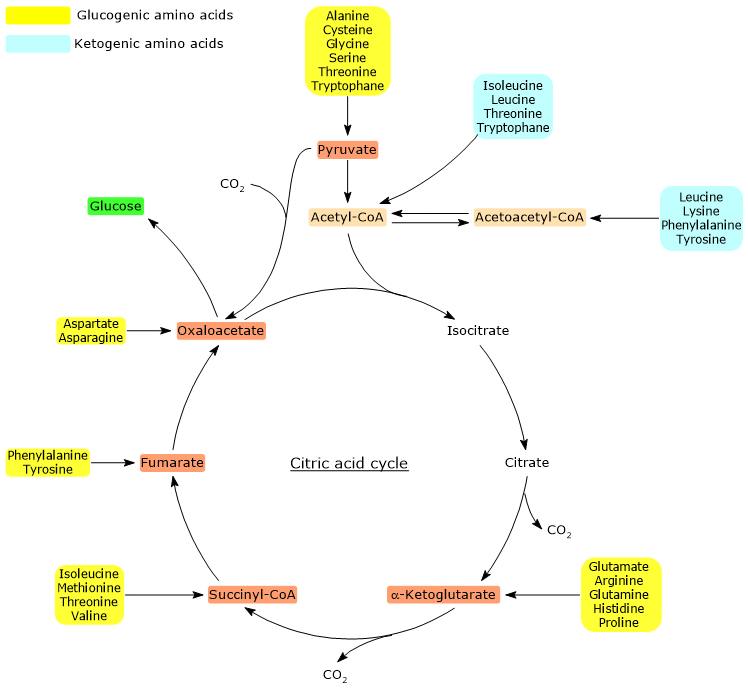
Acetyl-CoA enters the citric acid cycle through the reaction catalyzed by citrate synthase (EC 2.3.3.1). The enzyme catalyzes the condensation of acetyl-CoA with oxaloacetate to form citrate. Thus, a four-carbon compound is converted into a six-carbon compound, with a net gain of two carbon atoms.
However, in the two subsequent oxidative decarboxylations of the cycle, catalyzed respectively by isocitrate dehydrogenase (EC 1.1.1.42) and the α-ketoglutarate dehydrogenase multienzyme complex, two carbon atoms are lost.[4]
Therefore, the entry of acetyl-CoA into the cycle does not involve any net gain in carbon.[6]
The key factor is therefore the entry point of the carbon units, upstream or downstream of the oxidative decarboxylations of the citric acid cycle.[8]
Additionally, in animals, there is no metabolic pathway that allows the production of pyruvate from acetyl-CoA, due to the irreversibility of the reaction catalyzed by the pyruvate dehydrogenase complex, namely, the oxidative decarboxylation of pyruvate to acetyl-CoA.[8]
Ketogenic amino acids during prolonged fasting
Unlike glucogenic amino acids, ketogenic amino acids do not play a crucial role during prolonged fasting or in diets with severe carbohydrate restriction.
During prolonged fasting, the primary source of acetyl-CoA for ketogenesis is the β-oxidation of fatty acids, while the contribution of ketogenic amino acids is marginal. Under these conditions, glucogenic amino acids play a central role, as they ensure the maintenance of glucose homeostasis through gluconeogenesis when hepatic glycogen stores are depleted.[5]
Glyoxylate cycle
Plants, yeasts, and many bacteria can use acetyl-CoA for glucose synthesis because they have the glyoxylate cycle.
This cycle shares several reactions with the citric acid cycle but features two unique steps, catalyzed by isocitrate lyase (EC 4.1.3.1) and malate synthase (EC 2.3.3.9), while lacking any decarboxylation reactions. Consequently, organisms possessing the glyoxylate cycle can convert fatty acids and ketogenic amino acids into glucose.[9]
References
- ^ D’Andrea G. Classifying amino acids as gluco(glyco)genic, ketogenic, or both. Biochem Educ 2000;28(1):27-28. doi:10.1016/s0307-4412(98)00271-4
- ^ Brosnan J.T. Interorgan amino acid transport and its regulation. J Nutr 2003;133(6 Suppl 1):2068S-2072S. doi:10.1093/jn/133.6.2068S
- ^ Litwack G. Human biochemistry. 2nd Edition. Academic Pr, 2021.
- a b Moran L.A., Horton H.R., Scrimgeour K.G., Perry M.D. Principles of Biochemistry. 5th Edition. Pearson, 2012.
- a b c Rosenthal M.D., Glew R.H. Medical Biochemistry – Human Metabolism in Health and Disease. John Wiley J. & Sons, Inc., 2009.
- a b c Nelson D.L., Cox M.M. Lehninger. Principles of biochemistry. 8th Edition. W.H. Freeman and Company, 2021.
- ^ Felig P., Pozefsk T., Marlis E., Cahill G.F. Alanine: key role in gluconeogenesis. Science 1970;167(3920):1003-1004. doi:10.1126/science.167.3920.1003
- a b c Heilman D., Woski S., Voet D., Voet J.G., Pratt C.W. Fundamentals of biochemistry: life at the molecular level. 6th Edition. Wiley, 2023.
- ^ Kondrashov F.A., Koonin E.V., Morgunov I.G., Finogenova T.V., Kondrashova M.N. Evolution of glyoxylate cycle enzymes in Metazoa: evidence of multiple horizontal transfer events and pseudogene formation. Biol Direct 2006;1:31. doi:10.1186/1745-6150-1-31
Domande Frequenti
Which amino acids are classified as exclusively ketogenic?
Leucine and lysine are the only exclusively ketogenic amino acids. Their carbon skeletons are catabolized into acetyl-CoA or acetoacetyl-CoA, which can be used for ketone body or fatty acid synthesis but cannot serve as precursors for net glucose production in animals.
Why can ketogenic amino acids not produce glucose in animals?
Ketogenic amino acids generate acetyl-CoA or acetoacetyl-CoA during catabolism. In animals, these molecules cannot be converted into pyruvate or produce a net gain of oxaloacetate in the citric acid cycle, preventing their use as substrates for gluconeogenesis.
Which amino acids are both ketogenic and glucogenic?
Isoleucine, phenylalanine, threonine, tryptophan, and tyrosine are both ketogenic and glucogenic. Their catabolism produces ketogenic intermediates such as acetyl-CoA together with glucogenic metabolites like fumarate, pyruvate, or succinyl-CoA.
What is the biochemical role of ketogenic amino acids?
Ketogenic amino acids contribute to energy metabolism by producing acetyl-CoA and acetoacetyl-CoA. These intermediates can enter ketogenesis for ketone body production or be utilized in fatty acid synthesis when cellular energy requirements are satisfied.
How do ketogenic amino acids behave during prolonged fasting?
During prolonged fasting, ketogenic amino acids play a limited role in ketone body production compared with fatty acid β-oxidation. Glucogenic amino acids become more important because they support gluconeogenesis and help maintain blood glucose levels.