Grape polyphenols are phytochemicals, and the plant and its berries are among the richest sources of these compounds.
Grapes contain numerous micro- and macronutrients, such as water, monosaccharides, vitamins, minerals, fiber, and polyphenols.[1]
Grape polyphenol content and composition are strongly influenced by various factors such as the cultivar, the environmental conditions during ripening, processing, and any diseases, such as fungal infections.[2]
Polyphenols have been shown to be the most important compounds in determining the positive effects associated with the consumption of grapes and alcohol-free grape-derived products.[3] Their consumption, in fact, has been associated with positive health effects that are not limited to antioxidant and free-radical-scavenging actions alone, but also include anti-inflammatory, cardioprotective, anticancer, antimicrobial, and neuroprotective effects.[4]
Note: botanically, grapes are not single fruits, but an infructescence, that is, a cluster of fruits known as the bunch. In turn, the bunch consists of the peduncle, the rachis, the pedicels, and the berries, also known as grape berries.[5]
Summary: Key Points
- Definition and chemical nature: grape polyphenols are complex phytochemicals categorized into flavonoid and non-flavonoid molecules.
- Classes: they include anthocyanins, catechins, proanthocyanidins or condensed tannins, flavonols, hydroxycinnamic acids, stilbenes, and hydroxybenzoates.
- Berry localization: they are primarily concentrated in the skin epidermis and seeds, while the pulp contains only minor amounts.
- Cultivar differences: red grape varieties display significantly higher concentration and diversity of phenolic compounds compared to white grapes.
- Biological properties: they exert antioxidant, anti-inflammatory, cardioprotective, neuroprotective, and phytoalexin defense functions for the plant.
Contents
Grape polyphenols
These compounds are present in both greater quantity and variety in red grapes compared to white grapes, a factor that, according to many researchers, underlies the greater health benefits associated with the consumption of the former.[6]
Grape polyphenols are a complex mixture of flavonoid compounds, the most abundant group, and non-flavonoids. Among the flavonoids, we find:
- anthocyanins;
- catechins or flavan-3-ols;
- proanthocyanidins or condensed tannins;
- flavonols.
Among the non-flavonoid polyphenols:
- hydroxycinnamic acids;
- stilbenes;
- hydroxybenzoates.
| Family | Chemical class | Berry localization | Main compounds and notes |
|---|---|---|---|
| Flavonoids | Anthocyanins | Skin (pulp in “teinturier” varieties) | 3-monoglucosides of malvidin, petunidin, delphinidin. Absent in white grapes. |
| Catechins | Seeds and skin | (+)-catechin, (-)-epicatechin, epicatechin gallate. Up to 50% of total polyphenols in white grapes. | |
| Proanthocyanidins | Seeds, skin, rachis | Procyanidins B1–B8, C1, and high-molecular-weight condensed tannins. | |
| Flavonols | Skin epidermis | Quercetin, kaempferol; myricetin and syringetin in red grapes only. Function as UV shield. | |
| Non-flavonoids | Hydroxycinnamates | Pulp and skin | p-coumaric, caffeic, ferulic, sinapic acids. Primary UV absorbers in white grapes. |
| Stilbenes | Skin | Phytoalexins: trans-resveratrol, piceid, viniferins. Synthesized in response to pathogens and stress. | |
| Hydroxybenzoates | Skin and seeds | Gallic, gentisic, p-hydroxybenzoic acids. Mainly present in free form. |
Most of the flavonoids are concentrated in the epidermal layer of the skin, while 60–70% of the total polyphenols are found in the seeds. However, over 70% of these compounds remain bound to the solid matrices, namely the skin and seeds, and are not easily extracted through simple pressing of the fruit.[2][7]
The complex chemical interactions that occur between these compounds and between them and the other substances present in the grapes are likely essential in determining both the quality of the grapes and the wide range of therapeutic effects characteristic of these foods.[8]
Anthocyanins
They are flavonoids widely present in fruits and vegetables.[7]
In grapes, they primarily accumulate in the skin (in the outermost layers of the hypodermic tissue), giving them color, with shades that range from red to blue. In some varieties, known as “teinturier,” they also accumulate in the pulp of the grape.[9]
There is a close correlation between the synthesis of anthocyanins and the development of the grape. When the grape reaches veraison, which is the moment when its growth ends, their synthesis begins, which also causes the grape itself to change color and become purple. The synthesis reaches its peak at the complete ripening of the grape.[10]
Among the flavonoids in grapes, they are among the most powerful antioxidants.[11]
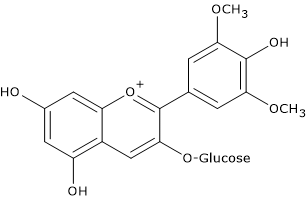
Each species and variety of grape has a unique composition of anthocyanins. Additionally, in Vitis vinifera grapes, due to a mutation in the gene that codes for 5-O-glucosyltransferase, which results in the synthesis of an inactive enzyme, only 3-monoglucosides are produced, while grapes from other species also undergo glycosylation at position 5. Interestingly, the 3-glucosidic derivatives are colored more intensely than the 3,5-diglucosides.[12]
In grapes, the main anthocyanins are the 3-monoglucosides of malvidin (the most abundant), petunidin, delphinidin, peonidin, and cyanidin.
The hydroxyl group in position 6 of glucose can in turn be acylated with an acetyl, caffeic, or coumaric group, an acylation that further increases its stability.[2]
Anthocyanidins, that is, the unconjugated forms, are only present in trace amounts.[13]
Anthocyanins are virtually absent in white grapes.[5]
Catechins
Together with condensed tannins, they are the most abundant flavonoids, representing up to 50% of the total polyphenols in white grapes and from 13% to 30% in red ones.
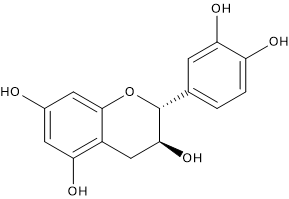
Typically, the most abundant flavan-3-ol in grape seeds is catechin, followed by epicatechin and epicatechin-3-O-gallate.[14]
Proanthocyanidins
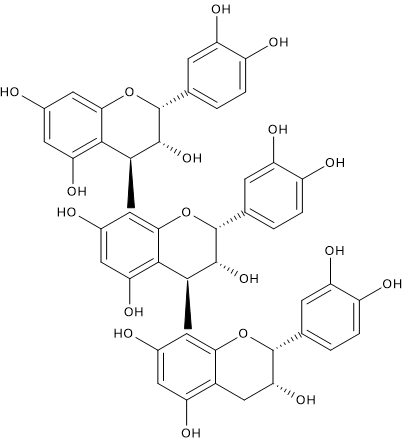
Composed of catechin units, they are present in the skin, seeds, and rachis of the grape cluster in the form of:
- dimers: the most common are procyanidins B1–B4, but dimers B5–B8 are also present;
- trimers: among which procyanidin C1 is the most abundant form;
- tetramers and higher oligomers;
- high molecular weight polymers (condensed tannins).[9][15]
Flavonols
They are present in a wide variety of fruits and vegetables, although in low concentrations.[7]
In grapes, they are the third most abundant group of flavonoids, after proanthocyanidins and catechins.[16]
They are primarily found in the outer epidermis of the skin, where they act as protective agents against UV-A and UV-B radiation, and they play a co-pigmentation role alongside anthocyanins. Their synthesis begins in the bud; the highest concentration is reached a few weeks after veraison, and then it decreases as the berry increases in size. Their total content is highly variable, with red varieties often being richer than white ones.[5]
In grapes, they are present as 3-glucosides. Their profile depends on the type of grape and cultivar:
- in white grapes, derivatives of quercetin, kaempferol, and isorhamnetin are found;
- the derivatives of myricetin, laricitrin, and syringetin are found, along with the previous ones, only in red grapes, due to the lack of expression of the gene that codes for flavonoid-3′,5′-hydroxylase (EC 1.14.14.81) in white grapes.[13]
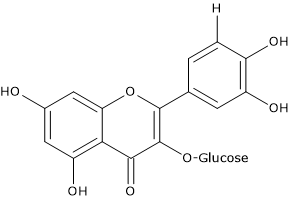
In general, the 3-glucosides and 3-glucuronides of quercetin are the main flavonols found in most grapes. In Muscat grapes, however, the most represented are quercetin-3-rhamnoside and quercetin aglycone.[13]
Unlike grapes, in grape juice, flavonols are also present as aglycones, as a result of the acid hydrolysis that occurs during processing and storage.[17]
Hydroxycinnamic acids
Hydroxycinnamic acids are the main class of non-flavonoid grape polyphenols. The most important ones are p-coumaric, caffeic, sinapic, and ferulic acids.[16]
They are molecules with antioxidant activity, and in some white cultivars of Vitis vinifera, together with flavonols, they are the primary polyphenols responsible for absorbing ultraviolet radiation at the level of the berry.[5]
Stilbenes
They are phytoalexins that, unlike flavonoids which are present in all higher plants, are produced in low concentrations by only a few edible species, including grapevines.[18]
Along with other grape polyphenols, stilbenes, particularly resveratrol, have been associated with the health benefits resulting from the consumption of the fruit.[3]
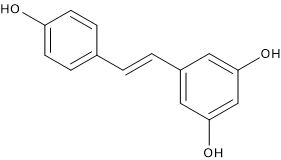
Their content increases from the veraison to the ripening of the berry and is influenced by the type of cultivar, climate, and fungal pressure.[18]
The main stilbenes present in grapes are:
- cis– and trans-resveratrol (3,5,4′-trihydroxystilbene);
- piceid or resveratrol-3-glucopyranoside and astringin or 3′-hydroxy trans-piceid;
- piceatannol;
- dimers and oligomers of resveratrol, known as viniferins, the most important of which are:
- α-viniferin, a trimer;
- β-viniferin, a cyclic tetramer;
- γ-viniferin, a highly polymerized oligomer;
- ε-viniferin, a cyclic dimer.
Other isomers and glycosylated forms of resveratrol and piceatannol, such as resveratroloside, hopeaphenol, and resveratrol di- and triglucoside, have also been identified in trace amounts in grapes.[2]
The synthesis of dimers and oligomers of resveratrol represents a defense mechanism against exogenous attacks, or conversely, is the result of the action of extracellular enzymes released by pathogens in an attempt to eliminate unwanted toxic compounds.[19]
Hydroxybenzoates
Derivatives of hydroxybenzoic acid are minor components of grapes.
In grapes, the main ones are gentisic, gallic, p-hydroxybenzoic, and protocatechuic acids.
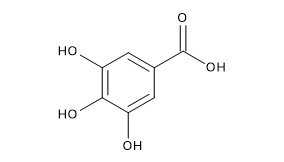
Unlike hydroxycinnamates, they are found in free form.[20]
Grape polyphenols and disease prevention
The intake of polyphenols through the consumption of grapes and non-alcoholic grape-derived products aligns seamlessly with a balanced dietary pattern, such as the Mediterranean diet.[8] Although the bioavailability of these molecules is influenced by their binding to the solid matrices of the berry, namely the skin and seeds, their consistent dietary presence contributes to modulating oxidative stress and low-grade systemic inflammation.[3] This phytochemical contribution acts as a valuable protective dietary factor in the primary prevention of major chronic degenerative diseases, including cardiovascular disorders, metabolic impairments, and age-related cognitive decline.[4]
References
- ^ Xia E-Q., Deng G-F., Guo Y-J., Li H-B. Biological activities of polyphenols from grapes. Int J Mol Sci 2010;11:622-646. doi:10.3390/ijms11020622
- a b c d Flamini R., Mattivi F., De Rosso M., Arapitsas P., Bavaresco L. Advanced knowledge of three important classes of grape phenolics: anthocyanins, stilbenes and flavonols. Int J Mol Sci 2013;14:19651-19669. doi:10.3390/ijms141019651
- a b c Zhou D.D., Li J., Xiong R.G., Saimaiti A., Huang S.Y., Wu S.X., Yang Z.J., Shang A., Zhao C.N., Gan R.Y., Li H.B. Bioactive compounds, health benefits and food applications of grape. Foods 2022;11(18):2755. doi:10.3390/foods11182755
- a b Nassiri-Asl M., Hosseinzadeh H. Review of the pharmacological effects of Vitis vinifera (Grape) and its bioactive constituents: an update. Phytother Res 2016;30(9):1392-403. doi:10.1002/ptr.5644
- a b c d Keller M. The science of grapevines: anatomy and physiology. 3rd Edition. Academic Press, 2020.
- ^ Li F.X., Zhang C., Fu Q.Q., Jin X.L., Zhang X.X., Wang C.Y. Comparison of phenolic profiles and antioxidant activities in skins and pulps of eleven grape cultivars (Vitis vinifera L.). J Integr Agric 2019;18(5):1148-1158. doi:10.1016/S2095-3119(18)62138-0
- a b Andersen Ø.M., Markham K.R. Flavonoids: chemistry, biochemistry, and applications. 1st Edition. CRC Press Taylor & Francis Group, 2006. doi:10.1201/9781420039443
- a b Liu R.H. Potential synergy of phytochemicals in cancer prevention: mechanism of action. J Nutr 2004;134(12 Suppl):3479S-3485S. doi:10.1093/jn/134.12.3479S
- a b Braidot E., Zancani M., Petrussa E., Peresson C., Bertolini A., Patui S., Macrì F., Vianello A. Transport and accumulation of flavonoids in grapevine (Vitis vinifera L.). Plant Signal Behav 2008;3(9):626-32. doi:10.4161/psb.3.9.6686
- ^ Castellarin S.D., Pfeiffer A., Sivilotti P., Degan M., Peterlunger E., DI Gaspero G. Transcriptional regulation of anthocyanin biosynthesis in ripening fruits of grapevine under seasonal water deficit. Plant Cell Environ 2007;30(11):1381-99. doi:10.1111/j.1365-3040.2007.01716.x
- ^ Han X., Shen T., Lou H. Dietary polyphenols and their biological significance. Int J Mol Sci 2007;8(9):950-988; doi:10.3390/i8090950
- ^ Boss P.K., Davies C., Robinson S.P. Analysis of the expression of anthocyanin pathway genes in developing Vitis vinifera L. cv Shiraz grape berries and the implications for pathway regulation. Plant Physiol 1996;111(4):1059-1066. doi:10.1104/pp.111.4.1059
- a b c Mattivi F., Guzzon R., Vrhovsek U., Stefanini M., Velasco R. Metabolite profiling of grape: flavonols and anthocyanins. J Agric Food Chem 2006;54(20):7692-702. doi:10.1021/jf061538c
- ^ Zhao D.Y., Simon J.E., Wu Q.L. A critical review on grape polyphenols for neuroprotection: strategies to enhance bioefficacy. Crit Rev Food Sci Nutr 2020;60(4):597-625. doi:10.1080/10408398.2018.1546668
- ^ Zhu J., Du C. Could grape-based food supplements prevent the development of chronic kidney disease? Crit Rev Food Sci Nutr 2020;60(18):3054-3062. doi:10.1080/10408398.2019.1676195.
- a b de la Rosa L.A., Alvarez-Parrilla E., Gonzàlez-Aguilar G.A. Fruit and vegetable phytochemicals: chemistry, nutritional value, and stability. 1th Edition. Wiley J. & Sons, Inc., Publication, 2009. doi:10.1002/9780813809397
- ^ Burin V.M., Falcão L.D., Gonzaga L.V., Fett R., Rosier J.P., Bordignon-Luiz M.T. Colour, phenolic content and antioxidant activity of grape juice. Food Sci Technol 2010;30(4). doi:10.1590/S0101-20612010000400030
- a b Schnee S., Viret O., Gindro K. Role of stilbenes in the resistance of grapevine to powdery mildew. Physiol Mol Plant Pathol 2008;72(4-6):128-133. doi:10.1016/j.pmpp.2008.03.002
- ^ Cichewicz R.H., Kouzi S.A., Hamann M.T. Dimerization of resveratrol by the grapevine pathogen Botrytis cinerea. J Nat Prod 2000;63(1):29-33. doi:10.1021/np990266n
- ^ Souquet J.M., Labarbe B., Le Guernevé C., Cheynier V., Moutounet M. Phenolic composition of grape stems. J Agric Food Chem 2000;48(4):1076-80. doi:10.1021/jf991171u
Domande Frequenti
Where are polyphenols primarily localized within the grape berry?
Most grape polyphenols (60-70%) are concentrated within the seeds and the outer epidermal layers of the skin. The pulp contains only minor amounts of bioactive compounds, predominantly consisting of non-flavonoid hydroxycinnamic acids.
What are the key phytochemical differences between red and white grapes?
Red grapes accumulate anthocyanins in the skin and contain trihydroxylated flavonols such as myricetin, laricitrin, and syringetin. White grapes lack anthocyanins and these specific flavonols due to non-expression of the flavonoid-3′,5′-hydroxylase gene.
What biological role do stilbenes like resveratrol play in grapes?
Stilbenes act as phytoalexins produced by the grapevine as a natural defense against fungal pathogens and exogenous stress. Together with resveratrol oligomers like viniferins, they protect plant tissues and display potent antioxidant properties.